Club Pilates Operations
The business runs on instructors, class scheduling and membership retention. How those three levers interact determines whether a studio clears its fee load or gets stuck below break-even.
The Instructor Model
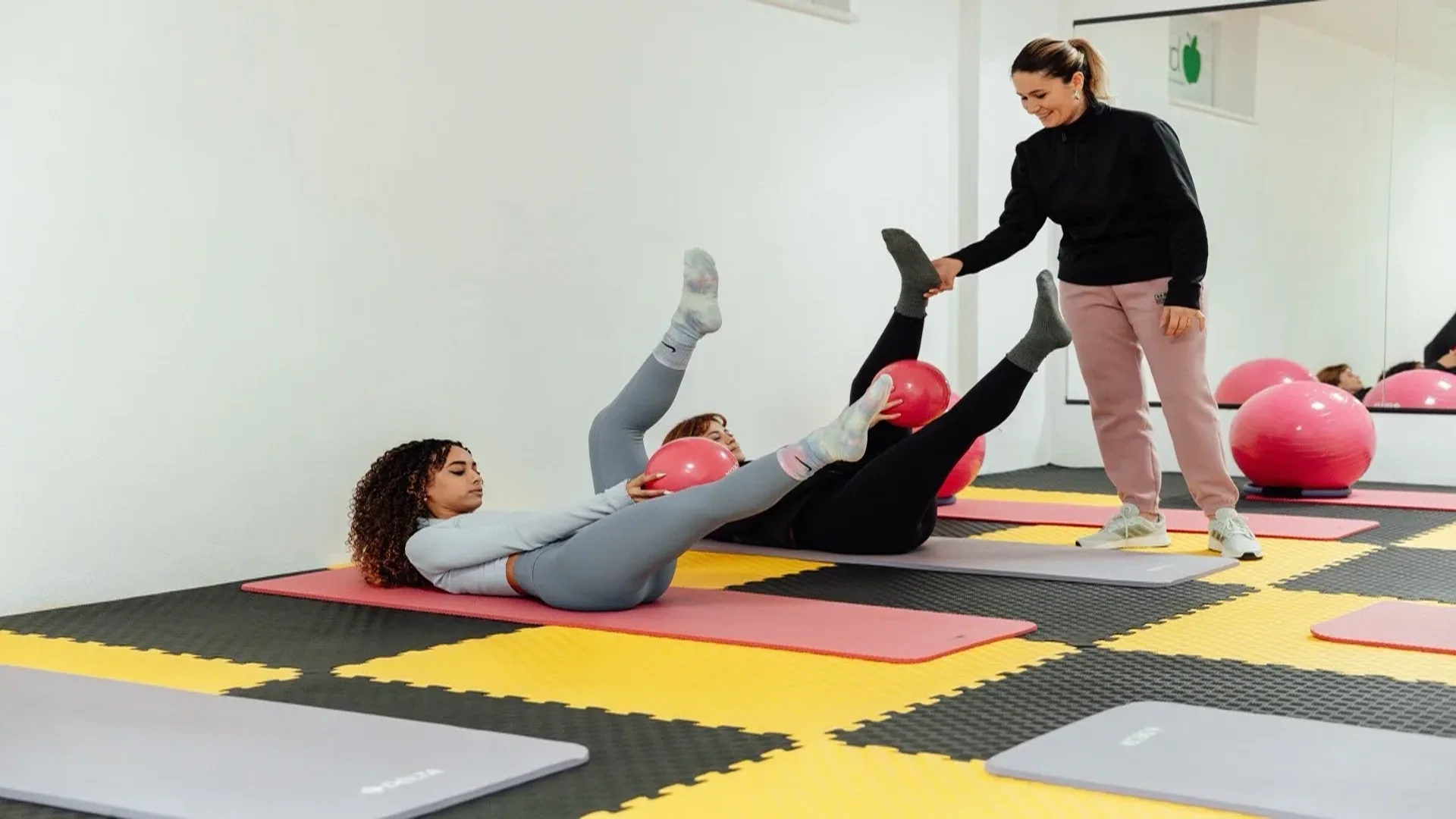
Club Pilates is an instructor-driven business. Unlike a 24-hour gym that sells access to equipment, a reformer Pilates studio sells a guided class experience. Every class requires a certified instructor on the floor, cueing movements, correcting form and managing the energy of a group of 10–12 participants on machines that can cause injury if used improperly. There is no self-service option. If the instructor does not show up, the class does not happen.
This creates the single largest operational challenge in the model: instructor recruitment and retention — what we call the instructor bottleneck. Qualified Pilates instructors hold specialised certifications — typically a comprehensive Pilates teacher training of 450–500 hours through bodies such as Balanced Body, BASI Pilates or Peak Pilates. The supply of these instructors is limited, and they are in demand across every reformer studio format in the market.
Compensation structures vary by market, but the dominant model is per-class pay. An instructor teaching a single class earns $30–$55 per session in most US markets (2024–2025, based on publicly posted compensation data and instructor forum discussions). A full-time instructor teaching 20–25 classes per week — an intense physical workload — earns $31,000–$71,000 annually before benefits, which most boutique studios do not offer to part-time staff.
The economics of the per-class model create a structural tension. A studio owner needs instructors available at peak times — early morning, lunchtime, and evening — but those same time slots are when the instructors are most in demand at competing studios. An instructor who can teach at 6 a.m. and 6 p.m. can split their week across two or three studios, and frequently does. Exclusivity is rare without full-time pay and benefits, which erode the studio’s margin.
The alternative is to invest in training. Some Club Pilates franchisees sponsor employees through Pilates teacher training programmes, paying $3,000–$6,000 for the certification in exchange for a commitment to teach at the studio for 12–24 months. This is an effective retention tool, but it is also a capital outlay that does not appear in the Item 7 investment range and adds 3–6 months of lead time before the newly trained instructor is class-ready.
Instructor turnover in boutique fitness runs high by industry standards — annual turnover rates of 30–50% are common across the sector. Every departure forces the studio to cancel classes (lost revenue), find a substitute (often at a premium), or compress the teaching load onto remaining instructors (accelerating burnout). The quality of the class experience — and therefore the membership retention rate — is directly tied to instructor stability.
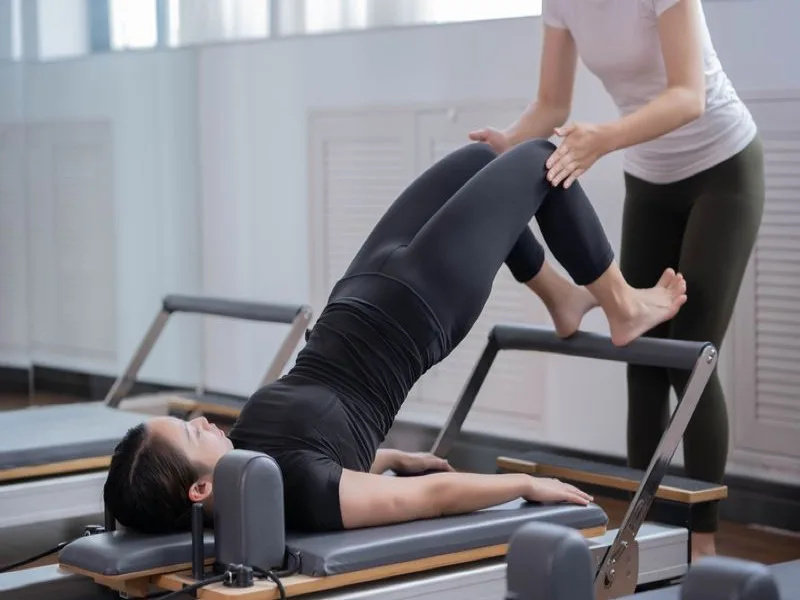
The instructor is the product. Members join for the class experience, and the class experience is the instructor. Studios with stable, high-quality teaching rosters retain members. Studios with revolving-door staffing lose them — and a lost member at $159/month takes 6–12 months of marketing spend to replace.
Membership and Class Economics
Club Pilates operates a membership-based revenue model with tiered pricing. The standard tier structure, as publicly listed by studios across the network, typically includes:
- 4 classes per month: Roughly $89–$109/month, depending on the market. This is the entry tier, positioned as a “try Pilates” option.
- 8 classes per month: Roughly $159–$179/month. The most commonly subscribed tier and the one that drives the bulk of recurring revenue for most studios.
- Unlimited classes: Roughly $199–$249/month. The highest-yield per-member tier, but also the one that most heavily loads instructor capacity.
In addition to memberships, most studios sell class packs (bundles of 5 or 10 classes at a per-class premium over the membership rate) and drop-in classes at $30–$40 per session. Class packs and drop-ins are higher-margin per visit but lower-margin per month, and they do not generate the predictable recurring revenue that memberships provide.
The Capacity Equation
Revenue is bounded by a simple physical equation: reformer count × classes per day × operating days per week × utilisation rate × effective revenue per visit. For a 12-reformer studio running 7 classes per day, 6 days a week, at 65% utilisation and an effective revenue per visit of $18–$22 (blended across membership tiers, factoring in that unlimited members pay less per visit than 4-class members), the weekly revenue ceiling is roughly $5,900–$7,200, or $307,000–$374,000 annually.
That range is well below the network average gross revenue of $984,270 (2024, per the 2025 FDD), which means studios achieving the average are either running more classes per day, achieving higher utilisation, pricing above the typical range, or some combination of all three. The spread between the theoretical floor and the disclosed average is where operational skill — scheduling optimisation, membership mix management, and retention — shows up in the numbers.
Membership retention is the most powerful lever in this equation. The cost of acquiring a new member (marketing, introductory offers, free trial classes) is estimated at $150–$300 per acquisition in competitive urban markets. A member who stays 18 months generates $2,862–$3,222 in gross revenue at the 8-class tier. A member who churns after 4 months generates $636–$716 and has not yet repaid the acquisition cost. Every percentage point of monthly churn reduction compounds across the membership base.
The Same-Store Sales Signal
In Q2 2026, Xponential Fitness reported same-store sales for Club Pilates of −5%, per the company’s quarterly earnings disclosure. Across the broader Xponential portfolio — which includes CycleBar, StretchLab, YogaSix, Pure Barre, BFT and Rumble — the figure was −6.8% (Q2 2026, per reported results).
Same-store sales (SSS) measure revenue growth at studios open for at least 12 months, compared to the same quarter in the prior year. A negative number means that the average mature studio brought in less revenue in Q2 2026 than it did in Q2 2025. This is a network-level metric — it does not mean every studio declined, but it means the average did.
A −5% SSS decline is not catastrophic in isolation, but it is directionally significant for a franchise system where the revenue ceiling is already constrained by physical capacity. In a gym model with thousands of members and equipment-based access, a 5% revenue dip might mean slightly lower utilisation of an underused asset. In a reformer studio where every class needs an instructor and capacity is measured in single-digit seats, a 5% revenue decline translates more directly into cancelled classes, lower utilisation and reduced instructor hours — which, if it triggers instructor departures, can accelerate into a feedback loop.
What Is Driving It?
The honest answer is that the data does not isolate a single cause. Several hypotheses are consistent with the observed decline, and they are not mutually exclusive:
- Market saturation: Club Pilates has grown rapidly — from roughly 600 open studios in 2021 to over 900 by 2025. In metros with high studio density, new openings may be cannibalising existing studios’ membership bases rather than expanding the total addressable market. When two Club Pilates studios open within three miles of each other, the total number of people interested in reformer Pilates in that radius does not double.
- Competitive pressure: The boutique fitness market has added significant reformer Pilates capacity outside the Club Pilates network. Independent studios, Solidcore (a direct competitor using a different reformer format), and new entrants have expanded the supply of reformer classes in many metros, giving prospective members more options and giving existing members reasons to switch.
- Post-pandemic normalisation: The 2022–2024 period saw a surge of pent-up demand for in-person fitness. Some portion of the growth in those years may have been a recovery bounce rather than sustainable trend growth. A −5% comp in 2026 could represent the market finding its equilibrium after the surge, not a structural decline.
- Pricing sensitivity: At $159–$249 per month, a Club Pilates membership is a premium consumer discretionary expense. In a macroeconomic environment with persistent inflation, consumer spending on premium fitness may be more elastic than the post-pandemic growth suggested. A household cutting discretionary spending is more likely to cancel its boutique fitness membership than its basic gym access.

One quarter is a signal, not a verdict. A single negative SSS print does not mean the franchise model is broken. It means the growth narrative that drove rapid expansion has, for now, reversed — and a prospective franchisee should model a scenario in which year-over-year revenue is flat or declining, not only one in which it grows.