Three Paths to a Goddard School Facility
The Goddard School’s facility requirements are among the most specific in childcare franchising. Every location needs roughly 10,000 square feet of interior space, purpose-designed classrooms sized to state licensing ratios, dedicated outdoor play areas, and a layout that meets both corporate brand standards and local code. How you get that building determines most of your initial investment.
Build-to-Suit Lease (Most Common Path)
In a build-to-suit arrangement, a commercial developer constructs the facility to Goddard’s specifications on land the developer owns, and the franchisee signs a long-term lease — typically 15 to 20 years with renewal options. The franchisee does not purchase land or manage general construction; the developer handles permitting, site work, and shell construction, while the franchisee funds the interior build-out and equipment.
The total franchisee investment on this path typically falls in the $1.0M–$1.5M range (leased facility). That covers the franchise fee, interior improvements, furniture and equipment, playground installation, signage, technology, initial marketing, and working capital. The shell itself is the developer’s cost, amortised into the lease rate.
This is the most common path for new Goddard franchisees because it limits the upfront capital requirement while still delivering a purpose-built facility. The trade-off is a long-term lease obligation that typically runs $20–$35 per square foot annually, depending on the market, plus NNN expenses. Over a 15-year primary term on a 10,000-square-foot building, lease payments alone can total $3M–$5M — capital that builds no equity in the real estate.
Key cost drivers on this path include market-specific construction costs (which vary widely by region), the complexity of the interior fit-out, playground equipment and safety surfacing, and local permitting requirements. HVAC, fire suppression, and commercial plumbing for multiple restrooms and a food-preparation kitchen are non-negotiable line items that push the interior build-out well above a typical commercial tenant improvement.
Retrofit of an Existing Building
Converting an existing commercial building — a former retail space, medical office, or church — to meet Goddard’s standards is sometimes faster than a ground-up build but rarely cheaper. The total investment for a retrofit path typically runs $1.7M–$5.0M (leased or purchased facility, depending on the deal structure), and the wide range reflects the unpredictability of what you find once walls come down.
Structural modifications are the largest variable. A childcare facility needs load-bearing walls in specific locations to separate age-group classrooms, ceiling heights that accommodate HVAC ductwork and sprinkler systems, and a floor plan that satisfies both egress codes and Goddard’s classroom-size requirements. Few existing buildings align with all of these out of the box.
Plumbing is the second driver. State licensing typically requires one toilet per 10–15 children, child-height fixtures, and separate handwashing stations in each classroom. A building designed for office or retail use may have four restrooms; a Goddard School needs twelve or more. Running new waste lines through an existing slab is expensive and disruptive.
Code compliance adds further cost. Converting a building’s occupancy classification to “educational” or “institutional” triggers fire-code upgrades, ADA renovations, and sometimes seismic retrofitting — none of which appear in the original lease negotiation but all of which land on the franchisee’s budget.
The retrofit path makes sense when the right location has no available land for new construction and the existing building’s bones — clear-span floor plate, adequate ceiling height, sufficient lot for outdoor play — reduce the structural work to a manageable scope. It rarely makes sense as a cost-saving measure.
Land Purchase and Ground-Up Construction
Buying the land and building the facility from scratch is the highest-capital path. The total investment for land purchase and construction typically ranges from $5.5M–$8.9M (including land acquisition), depending on the market, lot size, and local construction costs.
This path gives the franchisee maximum control — over the building’s design, the site layout, and the long-term real estate asset. There is no landlord, no lease escalation, and no renewal negotiation. The building is designed from day one to Goddard’s exact specifications, which eliminates the structural compromises inherent in a retrofit.
The capital requirement is the barrier. Land acquisition in the suburban corridors where Goddard Schools perform best — high-income residential density, good school districts, convenient commuter access — can run $500K–$1.5M or more for a sufficiently sized parcel. Construction of a 10,000-square-foot commercial childcare facility adds $3.5M–$6.0M depending on the region, and soft costs (architecture, engineering, permitting, impact fees) typically add 15–20% on top of hard construction costs.
This path is most common among multi-unit operators who have already proven the model with a leased location and want to build long-term real estate equity, or among franchisees with existing commercial real estate experience and access to construction financing. For a first-time franchisee, the leased build-to-suit path is almost always the recommended starting point.
Site Selection Criteria
Goddard’s corporate team evaluates and approves every site before a franchisee can proceed. The requirements are specific and non-negotiable — a site that fails any of them is rejected regardless of how attractive the lease terms are.
Square footage: A minimum of roughly 10,000 square feet of interior space, plus adequate outdoor area for age-appropriate playgrounds. Total lot size typically needs to accommodate 15,000–20,000 square feet when outdoor space, parking, and drop-off lanes are included.
Demographics: The target trade area is a 10–15 minute drive-time radius with high concentrations of dual-income households with children under 6. Median household income above $80,000 is a typical threshold. Goddard positions itself as a premium early education provider, and the tuition — often $1,500–$2,500 per month per child — requires a market that can support it.
Traffic and visibility: Locations on or near high-traffic commuter corridors perform best because parents integrate drop-off and pick-up into their daily commute. Corner lots with road frontage on two sides are preferred. Drive-through traffic counts of 15,000+ vehicles per day are a common benchmark.
Proximity to residential: Unlike retail, which can draw from 20+ minutes away, childcare is hyper-local. Most families will not drive more than 15 minutes each way. The facility needs to sit inside or immediately adjacent to the residential communities it serves, not in a remote commercial corridor.
Zoning: Childcare is classified differently from standard commercial uses in most municipalities. Conditional-use permits, special exceptions, or rezoning may be required, adding 3–6 months and $10,000–$50,000 in legal and application fees. Some jurisdictions impose additional requirements — traffic studies, neighbourhood notification, sound-barrier mandates — that can delay or derail a site entirely.
Compared to competitors like Kiddie Academy and Primrose, Goddard’s site requirements are broadly similar in square footage and demographic targeting, but Goddard tends to favour standalone buildings over strip-centre end-caps. This narrows the available inventory in dense suburban markets but produces a more distinctive street presence.
For a deeper look at whether your market supports a Goddard school — including the census data model, competitive mapping, and three warning signs — see the $20K tuition filter analysis. And for financing the build with an SBA 504 loan, including the interest reserve feature, see the 504 path walkthrough.
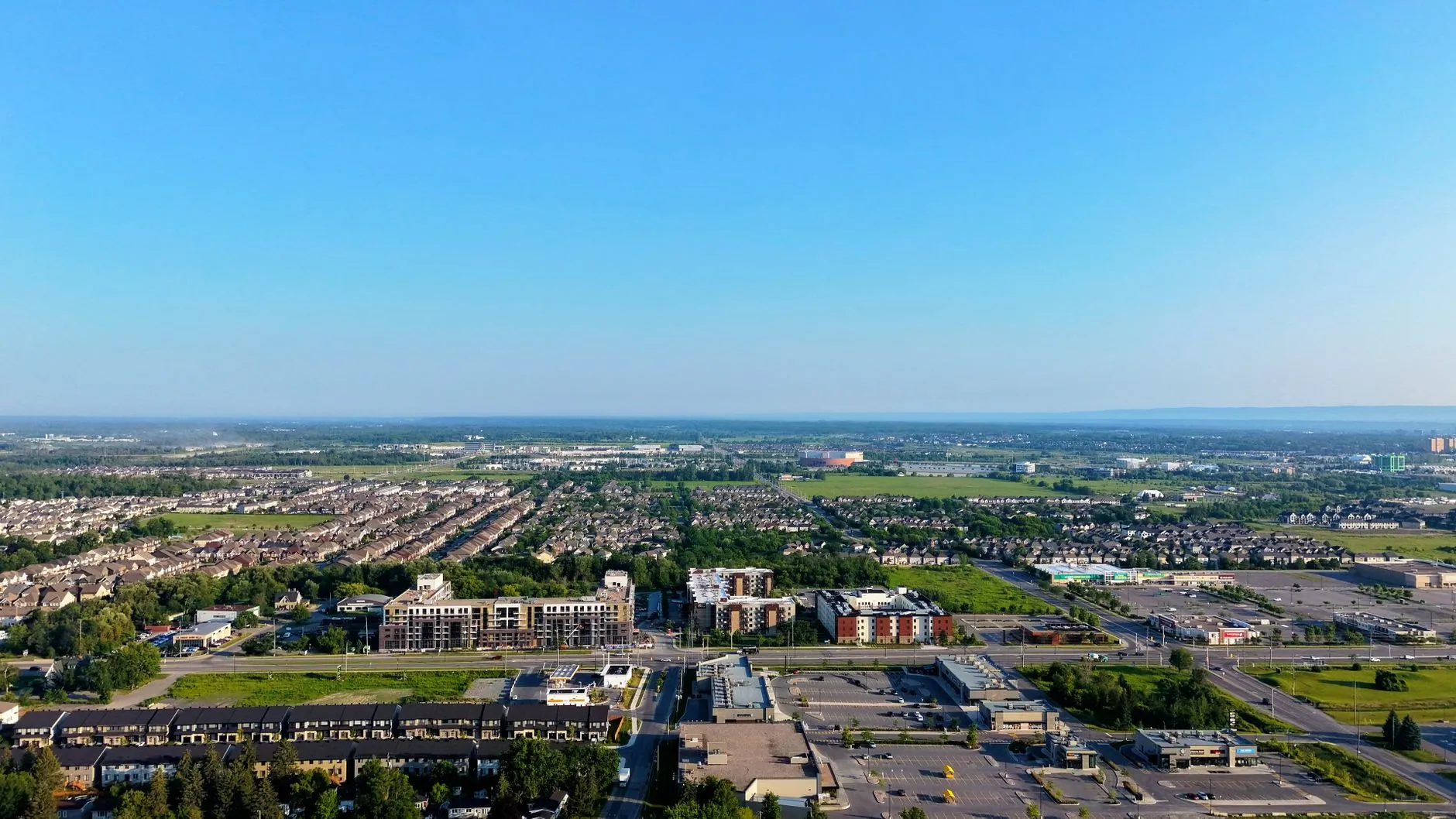
Build-Out Timeline
From signed lease to opening day, a Goddard School typically takes 12–18 months to build out. The timeline compresses or stretches based on the path you take and the municipality you are building in, but the sequence is consistent.
| Phase | Typical Duration | Key Activities |
|---|---|---|
| Site approval & lease execution | 1–3 months | Corporate site review, demographic analysis, lease negotiation, LOI to executed lease |
| Design & permitting | 2–3 months | Architectural plans, engineering, building-permit application, zoning approvals (conditional use can add 3–6 months) |
| Construction / build-out | 6–9 months | Shell construction or tenant improvements, HVAC, plumbing, electrical, fire suppression, playground installation |
| Licensing & inspection | 1–3 months | State childcare licence application, fire-marshal inspection, health-department inspection, certificate of occupancy |
| Pre-enrolment marketing | 3–6 months (overlapping) | Community outreach, waitlist building, open-house events, digital marketing — runs in parallel with construction |
Two phases deserve particular attention. Permitting is the most variable — in franchise-friendly municipalities with by-right zoning for childcare, permits can clear in 6–8 weeks. In jurisdictions requiring conditional-use hearings, neighbourhood notification periods, and traffic studies, the same step can take 6 months or longer. Experienced franchisees screen for zoning status before signing an LOI.
State childcare licensing is the final gate and cannot be shortened. Every state requires a completed facility inspection, staff background checks (which can take 2 weeks to 3 months depending on the state), proof of required credentials for all lead teachers and the centre director, and sometimes a pre-licensing observation period. You cannot enrol children — and therefore cannot generate revenue — until the licence is issued.
The practical consequence: you will carry 12–18 months of lease payments, loan interest, insurance, and pre-opening staffing costs before the first tuition cheque clears. This carrying cost is the reason the FDD estimates working-capital reserves of $150,000–$250,000, and many operators find they need more.
Key Takeaways
- Build-to-suit lease ($1.0M–$1.5M, leased facility) is the most common entry point — lowest upfront capital, but long-term lease obligations that build no equity.
- Retrofit ($1.7M–$5.0M) is viable when the right location has no land for new construction, but structural unknowns make budgeting unpredictable.
- Ground-up construction ($5.5M–$8.9M, including land) delivers maximum control and long-term asset value, but the capital requirement limits it to experienced or well-capitalised operators.
- Site selection is constrained by demographics, zoning, and Goddard’s corporate approval process — plan for 3–6 months of site search before anything else begins.
- The 12–18 month build-out timeline means you will carry significant costs before revenue starts. Model the carrying cost explicitly, not as a footnote.