Hotworx at 800 Studios: What the Growth Curve Tells You About Entering a Franchise in Year Eight
The unit count tells you where the brand is. The growth rate tells you where it’s going. Before you sign a franchise agreement, you need to understand the difference.
Where in the Lifecycle Does This Brand Sit?
The franchise pitch is almost always the same: we’re growing fast, brand awareness is high, the system is proven. All of that may be true. None of it answers the question that actually matters for your investment decision: where in the lifecycle does this brand sit, and what does that mean for your specific unit?
Hotworx crossed approximately 800 franchised studios in 2025–2026. That milestone sounds like momentum. It can also be a warning sign — depending on where you’re located, what territories remain, and what the growth rate deceleration over the past four years looks like.
Here is the analysis that franchise marketing materials will not give you.
The Unit Count Timeline: What Successive FDDs Reveal
Year-over-year unit count data from successive FDDs paints a clearer picture than any single-year snapshot. Based on available FDD filings and third-party franchise data, Hotworx’s franchised unit trajectory looks approximately like this:
| Year | Approx. Franchised Units | Net New Units | YoY Growth Rate |
|---|---|---|---|
| 2019 | ~100 | — | — |
| 2020 | ~250 | ~150 | 150% |
| 2021 | ~350 | ~100 | 40% |
| 2022 | ~450 | ~100 | 29% |
| 2023 | ~550 | ~100 | 22% |
| 2024 | ~650 | ~100 | 18% |
| 2025 FDD | ~712 | ~62 | 10% |
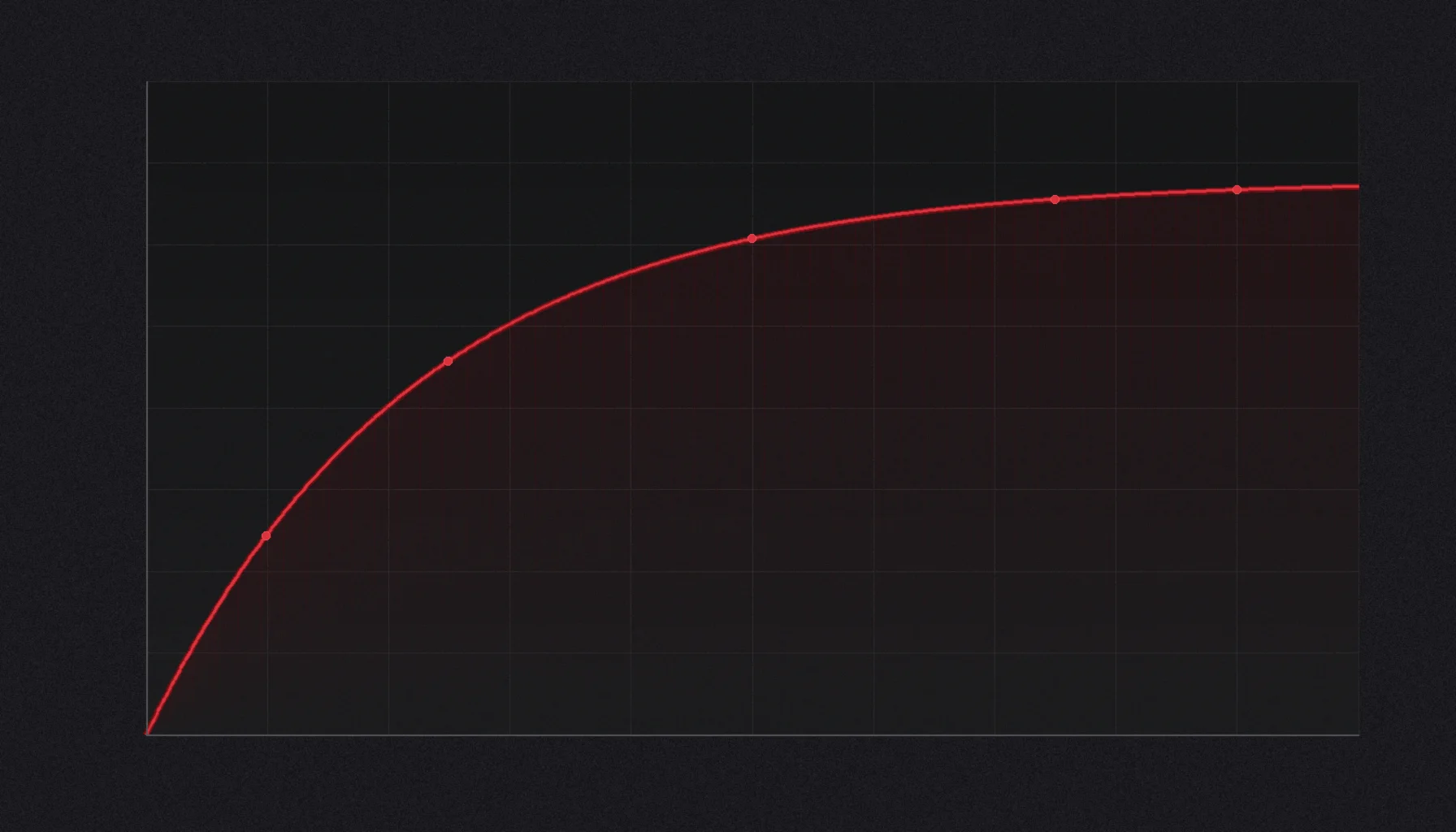
That table tells a precise story. Annual net openings have been roughly flat in absolute terms — around 100 units per year from 2020 through 2024, then decelerating to approximately 62 net new units in the most recent FDD period. The percentage growth rate has dropped from 150% in 2020 to approximately 10% by 2025.
Gross vs. Net Openings
Net unit count hides something important: gross openings minus closures. The 2025 FDD reportedly discloses “1 closure” in the relevant period, which sounds like extraordinary retention. Take that figure at face value carefully.
- FDD closure disclosures typically cover only the most recent reporting period, not cumulative closures over the system’s life.
- Units that “transferred” (sold from one franchisee to another) do not count as closures in FDD Item 20 disclosures.
- Units that closed and were replaced by a nearby location may appear as a net-zero event.
The single reported closure does not mean the system has never had a struggling unit. It means the most recent disclosure period shows one. For context on what the financial performance data actually shows, see the FDD Item 19 breakdown.
What Decelerating Growth Rate Actually Signals
A system adding the same absolute number of units each year while the base grows is, by definition, decelerating on a percentage basis. That is mathematically normal and not inherently alarming. But there are two scenarios that produce the same data:
- Healthy maturation — the brand has filled its highest-value territories, franchisees in mature markets are performing well, and growth continues at a sustainable pace in secondary markets.
- Demand deceleration — the most motivated, capitalized buyers have already entered, remaining leads are harder to qualify, and territory quality is declining because the best locations were sold years ago.
You cannot tell which scenario is operative from unit count data alone. You need to cross-reference it against Item 19 performance data, franchisee validation calls, and territory saturation analysis.
The Franchise Lifecycle Framework
Franchise systems move through four broadly recognized phases. Understanding which phase Hotworx currently occupies is the foundation of your investment timing analysis.
Phase 1: Launch (1–100 Units)
Early franchisees take on maximum risk and maximum opportunity. Brand awareness is low outside the franchisor’s home market. Operational systems are still being stress-tested. Territory maps are wide open.
- Upside: First pick of the best territories. Founding franchisee relationships with corporate. Potential to grow with the system.
- Downside: No proof of concept at scale. FDD has limited performance data. Support infrastructure is thin.
Phase 2: Rapid Growth (100–500 Units)
This is where Hotworx was from approximately 2019 to 2022. Brand awareness is building. Item 19 data starts to become meaningful. The best territories are being claimed fast. Buyers who moved in Phase 1 are seeing results — or not — and those results are finally visible to prospective buyers.
- Upside: Brand momentum is real. Operational systems are being refined rapidly. FDD data is accumulating.
- Downside: Territory selection is competitive. Corporate is scaling support infrastructure to keep pace with growth, which creates service gaps.
Phase 3: Maturation (500–1,500 Units)
This is where Hotworx sits today. The model is proven at scale. Brand recognition is meaningful in most major markets. Item 19 data is robust. Operational playbooks are mature. The support team is large enough to be functional.
- Upside: You are buying a known quantity. The experiment is over. Failure modes are documented. You can do real validation calls with dozens of franchisees who have years of operating history.
- Downside: Prime territories are gone or significantly more expensive. Growth deceleration is underway. Remaining territories skew toward secondary and tertiary markets where the model’s economics may look different.
Phase 4: Saturation (1,500+ Units)
The system has filled its addressable domestic market. Net unit growth flattens or reverses. Franchisee resale values are driven more by individual unit performance than by system-level momentum. Royalty-based revenue for the franchisor becomes the primary economic engine.
Hotworx is not in Phase 4. But the decisions you make today — about territory, location, financing — will determine your position when the system approaches that threshold.
Historical Parallels at 800 Units
For calibration: where were comparable boutique fitness franchises when they crossed 800 units?
- Orangetheory Fitness crossed 800 units around 2017–2018. It continued growing to approximately 1,500 studios before growth materially slowed. Franchisees who entered at 800 units generally had access to viable secondary market territories and benefited from continued brand momentum.
- F45 Training reached approximately 1,500 locations by 2022, then experienced significant unit count contraction amid financial distress at the corporate level — demonstrating that unit count and system health are not the same metric.
- Planet Fitness crossed 800 units around 2012 and has grown to over 2,400 locations. But Planet Fitness operates a fundamentally different model (high-volume, low-cost) with a much larger addressable market than an infrared-specific concept.
The infrared boutique fitness space is not analogous to a $10/month gym. It has a more defined customer profile, a higher price point, and a smaller addressable household base per territory. The relevant comparison set is mid-market boutique fitness — which has historically shown that systems between 500 and 1,500 units can perform well for franchisees, but territory quality becomes the critical variable.
Entrepreneur’s 2026 Franchise 500 ranked Hotworx at No. 58, up significantly from prior years — a signal of growing institutional recognition of the brand, though rankings weight growth rate and system size metrics that may not translate directly to individual unit economics.
The Territory Quality Question
Every franchise territory conversation starts with the same assumption: the remaining territories are available because they haven’t been sold yet, not because they’re inferior. That assumption deserves direct examination.
Why Early Territories Got Taken First
The franchisor’s initial area developers and early franchisees were often given — or chose — markets based on:
- Population density and household income levels matching the target demographic
- Proximity to the franchisor’s home market (Louisiana for Hotworx) where field support was most accessible
- Existing fitness culture and boutique studio density (a market with active boutique fitness consumers is easier to sell to than one without)
- Commercial real estate availability and lease economics favorable to a small-footprint studio model
The territories that remain at 800+ units are, on average, further down that priority list. That does not mean they are unviable. It means you have to do the work to verify viability rather than assuming it.

How to Evaluate a Remaining Territory
Do not rely on the franchisor’s territory demographic package as your primary due diligence. Build your own analysis:
- Pull the FDD Item 20 data for your state. It shows every unit opened and closed in your area, with dates. Map the existing locations relative to your proposed territory.
- Identify who passed on this territory. If the territory was previously offered and not taken, find out why. Ask the franchise development team directly: has this territory been shown to other candidates? What happened?
- Check competitive density. Not just Hotworx competitors — all boutique fitness within a 5-mile radius. Orangetheory, F45, yoga studios, Pilates, cycling studios. Consumer attention and fitness spending are finite.
- Run the population math. A workable Hotworx territory needs sufficient households in the target demographic (health-conscious adults 25–55 with discretionary income). Calculate minimum viable membership at your break-even — then calculate what market penetration rate that requires. If break-even requires capturing 0.5% of the addressable market, that is different from requiring 3%.
See the detailed methodology in the territory saturation analysis.
Area Developer Dynamics
Hotworx uses area developers — franchisees who hold development rights to larger geographic areas and sub-franchise individual units within them. If your territory is within an area developer’s region, your relationship is primarily with the area developer, not directly with corporate Hotworx.
This matters because:
- Area developer incentives around sub-franchisee support may differ from corporate incentives
- Your territory protection is defined by the area developer agreement, not just your franchise agreement
- Resale economics on your unit will be affected by the area developer’s right of first refusal and transfer fees
Understand the full ownership structure before signing. If you are working through an area developer, request both the franchise agreement and the area development agreement for review. See multi-unit area developer economics for the full breakdown.
The 1,000-Unit Horizon: What Happens Next
Hotworx has publicly stated growth goals that would push the system toward and beyond 1,000 units. The brand has signaled international expansion — including moves into Mexico and reports of activity in Dubai markets. Understanding what that means for domestic franchisees is not optional analysis.
Domestic Territory Ceiling
The United States has approximately 330 million people. Hotworx’s target demographic is a subset of that — health-focused adults in markets with appropriate income demographics and retail infrastructure for a studio model. Estimating addressable domestic locations is imprecise, but useful as a boundary condition.
Comparable boutique fitness systems have found natural ceilings in the 1,000–2,000 unit range for specialized concepts. A brand with a specific modality (infrared sauna + HIIT) has a narrower target market than a general fitness brand. If the domestic addressable market is, say, 1,200–1,500 high-quality locations, a system at 712 units has used approximately 50–60% of its best-available domestic inventory.
That math has direct implications for territory quality among the remaining 40–50%.
International Expansion and Domestic Franchisees
International expansion can signal brand strength. It can also signal that domestic territory inventory is depleting — the franchisor is looking outward because the domestic map is filling in. For domestic franchisees, the practical impacts are:
- Royalty and marketing fund dollars generated internationally generally stay in international markets, at least initially. They do not necessarily benefit your domestic marketing.
- Corporate attention is divided. A franchisor scaling internationally is simultaneously building infrastructure in new markets, which may draw executive bandwidth away from domestic franchisee support.
- Brand positioning may evolve based on international market requirements, not domestic franchisee needs.
The international expansion analysis walks through this in detail.
The Planet Fitness Lesson
Planet Fitness crossed approximately 1,000 units around 2013. It continued to 2,400+. But Planet Fitness operates with a fundamentally different unit economics model — massive volume, minimal labor, low price point, enormous addressable market. The brand could expand into virtually any suburban and secondary market without meaningful demand constraints.
An infrared boutique studio cannot. The customer willing to pay $50–$100+ per month specifically for infrared fitness exposure is a definable, finite population in any given geography. When the domestic system approaches saturation, the franchisees who entered in Phase 3 maturation — which includes anyone entering now — will experience the growth deceleration directly in their unit economics.
The relevant benchmark is not whether Hotworx can reach 1,000 units. It almost certainly can. The relevant question is whether your specific unit will benefit from the brand’s trajectory from 800 to 1,000, or whether you will be trying to sell an established franchise in a mature, densely competitive local market in five years.
Timing Your Entry: The Investor’s Decision Framework
Entering at maturation phase is not inherently a mistake. For the right buyer, in the right territory, with the right financial structure, Phase 3 entry offers advantages that Phase 1 and Phase 2 buyers simply did not have.
What You Get That Early Entrants Didn’t
- Proven unit economics. The FDD Item 19 data now represents multiple years of operating history across hundreds of locations. Early buyers were extrapolating from a handful of company-owned locations.
- Mature operational systems. Training playbooks, SAIL POS integration, member acquisition frameworks — all of these are more developed at 700+ units than they were at 100.
- Franchisee validation pool. You can now call 30–40 franchisees who have been operating for 3+ years and ask specific questions about Year 2 and Year 3 performance, not just opening-year results.
- Brand recognition. In most major markets, Hotworx now shows up in fitness-related searches, social media, and word-of-mouth. Cold market education is less costly than it was in 2019.

What You Pay for That Timing
- Territory premium. The best territories are gone. You are choosing from what remains — which requires more diligence, not less.
- Competitive density. Markets with strong boutique fitness culture (which are also the best markets for Hotworx) may already have competing studio concepts that have established member bases.
- Growth deceleration risk. If the brand’s unit count growth continues to slow, the tailwind of system momentum that benefits early entrants weakens. You are betting on individual unit performance more than system-level rising tide.
- Resale market uncertainty. In five to seven years, when you might want to exit, the resale market for a Hotworx franchise will depend heavily on what the system looks like at 1,000–1,500 units. There is less visibility on that than there was for early entrants exiting into a growing system.
Adjusting Your Revenue Projections for Market Maturity
Do not use the system-wide FDD Item 19 average as your projection baseline without adjustment. The $330,476 average reported in the 2025 FDD aggregates across all reporting units — including those in established markets with years of membership history.
For a new unit in a secondary or tertiary market entered in 2025–2026, you should:
- Isolate comparable units. From your franchisee validation calls, identify units that opened in similar market types (population, income, boutique fitness density) within the last 24–36 months. Their ramp trajectory is more predictive than the system average.
- Model Year 1 and Year 2 separately. Ramp periods for boutique studios are typically 12–18 months to reach steady-state membership. Your break-even analysis needs to account for cash burn during ramp, not just steady-state economics.
- Stress-test the floor. Run the unit economics at 60% of the Item 19 median, not the average. If the business is viable at that number with your financing structure, you have meaningful downside protection.
- Build in competitive response. Assume that if your unit is successful, a competitor will notice within 18–24 months. Model what happens to your membership base if a comparable boutique studio opens within 2 miles in Year 3.
For detailed unit economic modeling, see the FDD Item 19 breakdown.
The Question for Your Franchise Consultant
If you are working with a franchise consultant (broker), understand that their compensation is typically a commission paid by the franchisor upon successful franchise sale. That structural misalignment does not make all brokers bad actors — many provide genuinely useful guidance — but it means you should supplement their analysis with independent research.
The specific question to press on: “Show me the 24-month operating history for units that opened in markets comparable to my target territory, and tell me how many of those franchisees would make the same decision again.”
That question will tell you more than any Franchise 500 ranking or marketing overview. It requires your consultant to have actually done the work, and it puts specific, verifiable data on the table.
What the Growth Curve Actually Tells You
Hotworx at approximately 800 units is a maturing franchise system with a proven concept, decelerating growth, and an increasingly defined remaining territory map. That is not a disqualifying profile. It is a specific risk-reward profile that requires specific diligence.
The growth rate decline from 150% in 2020 to approximately 10% in 2025 is normal for a system at this stage. The question is not whether that decline is alarming — it isn’t, in isolation — but whether the remaining territory you are evaluating is one of the viable secondary markets or one of the passed-over locations that wasn’t sold earlier for good reasons.
Do the territory work. Pull comparable unit data from franchisee validation calls. Model your break-even at conservative revenue assumptions. Understand the area developer structure if applicable. Review the international expansion trajectory and what it means for domestic franchisee support.
The analytical framework exists. The data is available in the FDD, through FranchiseGrade, and through direct franchisee conversations. What it requires is the discipline to use it before, not after, you sign.
This analysis is based on publicly available FDD data, third-party franchise research, and comparable system benchmarking. It does not constitute investment, legal, or financial advice. Prospective franchisees should retain independent franchise counsel and conduct their own due diligence before making any franchise investment decision.