
The Q1 2027 Due Diligence Calendar: Your 90-Day Playbook for the Waiting Period Between October Anxiety and January Clarity
You’ve decided to wait past October 1. Good. Here’s how to make the next 90 days the most productive period of your franchise evaluation — so you arrive in January ready to execute, not just three months older.
Preparing While Waiting Is a Strategy
This site has published more than 30 pieces on the October 1 SBA changes. The decision framework walked through whether to proceed, wait, or walk. The October inversion analysis showed that new-unit buyers face fewer new hurdles than resale buyers.
If you’ve read all that and decided to wait — you’re not wrong. The lender learning curve alone means Q4 2026 will be the slowest closing environment in years.
But waiting is not a strategy. Preparing while waiting is a strategy.
Here’s what 90 days of productive waiting looks like, week by week.
Phase 1: October — Foundation (Weeks 1–4)
You’re not closing a deal this month. Nobody is, unless they got their SBA loan number before October 1 and grandfathered in under the old rules. Use the quiet to build the foundation.
Week 1 (Oct 1–7): FDD Deep Read
- Request the current FDD if you haven’t already. Hotworx’s 2026 FDD covers FY2025 data. If you’re working with a franchise broker, they should provide it within the 14-day receipt period. If not, request it directly from the franchisor’s development team.
- Read Item 19 twice. First for the headline numbers: median AUV $336,613, average EBITDA $107,306. Second for the distribution — the top quartile question matters more than the average.
- Read Item 7 line by line. Total investment $252,200–$901,440 (standard), $356,299–$1,182,389 (NY/CA). Map every line item to a real quote you’ll get in Phase 2. The cost compound analysis shows how these numbers interact.
- Flag every assumption in Item 7 that depends on your specific market — rent, buildout costs, local permits.
Week 2 (Oct 8–14): Franchise Attorney Engagement
- Hire a franchise attorney. Not a general business lawyer — a franchise-specific attorney who reviews FDDs regularly. Budget $3,000–$7,000 for a full FDD review.
- Send them the FDD with your specific questions from Week 1. Ask them to flag: non-compete scope, transfer restrictions, area development deadlines, dispute resolution clauses, and the personal guarantee requirements.
- Ask about the franchise agreement term. The 10-year agreement structure versus the payback timeline is a question your attorney should address directly.
Week 3 (Oct 15–21): Market Research
- Drive every potential territory. Hotworx territories are non-exclusive above 125,000 population within a radius for some franchise systems. Understand the density in your target area, the existing Hotworx studio count, and the competitive fitness landscape.
- Visit 3–5 Hotworx studios as a member. Pay for drop-ins or trial memberships. Go at different times — morning, lunch, evening, weekend. Count how many saunas are occupied. Talk to whoever is staffing (or notice that nobody is). The consumer due diligence playbook covers what to observe.
- Map the competition. Within a 5-mile radius of your target territory, list every gym, boutique studio, and recovery center. Note their pricing, membership models, and Google review scores.
Week 4 (Oct 22–31): Validation Calls — Round 1
- Item 20 lists every current and former franchisee. Call at least 10. The validation call playbook has the question set, but the most important question for YOUR timing is: “If you were signing today under the new SBA rules, what would you do differently?”
- Call 3 former franchisees. Item 20 lists those who left the system in the last year. These calls are harder to get but more valuable. Ask what the exit looked like — transfer fees, liquidated damages, the co-terminus lease.
- Document everything. Create a spreadsheet tracking: franchisee name, market, years open, satisfaction (1–10), biggest surprise, revenue range they’ll share, and their honest advice.
Phase 2: November — Financial Architecture (Weeks 5–8)
October gave you knowledge. November converts it into numbers.
Week 5 (Nov 1–7): Pro Forma Model v1
- Build your first financial model. Use the post-October pro forma framework as the template. Input: your specific market’s rent, your territory’s population density, and the validation data from Week 4.
- Model three scenarios: Conservative (bottom quartile revenue, $220,000), base (median, $336,613), and optimistic (top quartile). Apply the 28.29% EBITDA margin as a starting point, then adjust for your market’s payroll reality and rent level.
- Calculate your DSCR under the new rules. The SBA requires 1.15:1 for business expansion loans. Your annual net operating income after owner draw must cover your annual debt service by at least 1.15x. Run this on all three scenarios.
Week 6 (Nov 8–14): Lender Conversations
- Talk to 3–5 SBA preferred lenders. Don’t apply — just have conversations. The lender learning curve means many lenders are still digesting the 416 pages of new SOP. By November, the early adopters will have processed their first deals under the new rules. Ask:
- What’s your current processing time for new franchise loans?
- Have you closed a Hotworx deal under the new SOP?
- What documentation are you requiring beyond the standard checklist?
- What DSCR threshold are you actually using (the SBA minimum is a floor, not a ceiling)?
- Get pre-qualification letters from at least two lenders. This isn’t commitment — it’s data. You need to know your borrowing capacity before you negotiate.
- Understand the equity injection requirement. The SBA requires 10% equity injection against total project cost. On a $500,000 total investment, that’s $50,000 in cash or unencumbered assets. Know where yours is coming from.
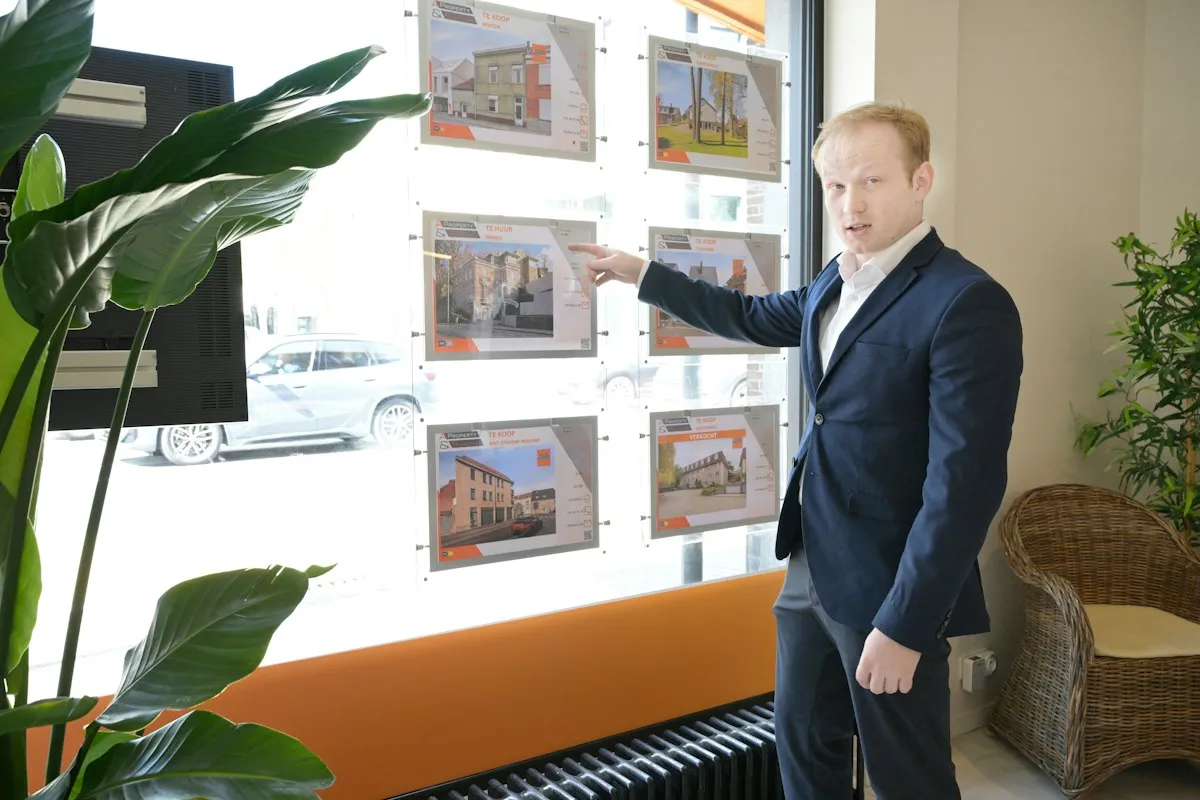
Week 7 (Nov 15–21): Real Estate Reconnaissance
- Identify 3–5 potential sites in your target territory. For Hotworx, you need roughly 1,200–2,400 square feet of retail space with specific electrical requirements for the sauna units. Work with a commercial real estate broker who understands fitness buildouts.
- Get lease quotes. Even preliminary LOIs give you real numbers to put in your pro forma instead of Item 7 estimates. The lease leverage window analysis may still apply in your market.
- Get buildout estimates. Contact 2–3 general contractors who have done fitness buildouts in your market. Hotworx buildouts are relatively standardized, but local permitting, HVAC requirements for heated spaces, and electrical capacity for infrared panels vary significantly.
Week 8 (Nov 22–30): Insurance Architecture
- Contact 3 commercial insurance brokers. Hotworx studios require general liability, professional liability, property insurance, and workers’ comp even for minimal staff. The infrared equipment category is seeing insurance repricing after three CPSC recalls — get actual quotes, not estimates.
- Ask about the unmanned premium. 24/7 operations with limited staff carry a different insurance premium load than staffed facilities. Know the delta.
- Get a cyber liability quote. Hotworx collects biometric data and payment information through its technology platform. You need coverage for data breach.
Phase 3: December — Decision Architecture (Weeks 9–12)
You now have real data from real sources. December is for assembling it into a decision.
Week 9 (Dec 1–7): Pro Forma Model v2
- Rebuild your financial model with the real numbers from November: actual lease quotes, actual insurance quotes, actual buildout estimates, actual lender terms. Replace every Item 7 estimate with a market-specific number.
- Run the 13-year payback analysis. Your franchise agreement is 10 years. If payback extends beyond year 5, the remaining return window narrows. Model it.
- Stress-test for the dual-membership churn scenario. The wallet share analysis shows Hotworx is typically a supplementary membership. Model a recession quarter where 15% of members consolidate to one gym.
Week 10 (Dec 8–14): Validation Calls — Round 2
- Call back 3–5 franchisees from Round 1 with your specific numbers. “I’m modeling $14/SF rent in [your market]. Does that match your experience?” Concrete questions get concrete answers.
- Ask the December question: “How does Q4 seasonality affect your studio? What’s your worst month?” The seasonal revenue patterns matter more than annual averages for cash flow planning.
- Ask about the technology fee. The $1,800/month technology fee is a fixed cost regardless of revenue. At $336K median AUV, that’s 6.4% of revenue on top of the $695 flat royalty. Confirm whether franchisees see that as proportional to value.
Week 11 (Dec 15–21): Decision Brief
- Write a one-page decision brief for yourself (and your spouse, partner, or advisor). It should answer:
- What’s the total capital required? (Investment + reserves + working capital through break-even)
- What’s the realistic timeline to positive cash flow?
- What’s the annual return on invested capital in the base case?
- What’s the single biggest risk, and can you mitigate it?
- Do you have a viable exit path if it doesn’t work?
- Share it with your franchise attorney for a reality check. They’ve seen the FDD; they know the agreement terms. Ask them to poke holes.
Week 12 (Dec 22–31): Holiday Reset
- Stop working on it for a week. Seriously. You’ve spent 11 weeks building knowledge and running numbers. Take the holiday to let the emotional charge dissipate. Franchise buying decisions made under excitement or anxiety both fail at higher rates.
- Revisit the decision brief on January 2 with fresh eyes. If the numbers still work and the risk is still acceptable, you have a green light. If something nags at you, that’s information.
What January Looks Like If You’ve Done This Right
A buyer who spent October through December passively waiting arrives in January with the same information they had in September plus three months of SBA anxiety.
A buyer who followed this calendar arrives in January with:
- A franchise attorney who has reviewed the full FDD
- Validation data from 10+ current and former franchisees
- A pro forma built on real lease quotes, real insurance quotes, and real buildout estimates — not Item 7 ranges
- Pre-qualification from 2+ SBA lenders operating under the new SOP
- 3–5 identified sites with preliminary lease terms
- A one-page decision brief reviewed by counsel
That buyer doesn’t need to “start the process” in January. They need to pick a site and sign. The difference between a January-ready buyer and a January-starting buyer is roughly four months of elapsed time — the exact margin where the best territories close to new applicants.
A Note on Timing and Financing
The SBA lending landscape in Q1 2027 will be clearer than it is today. Lenders will have closed their first deals under SOP 50 10 8.1. Processing times will normalize from the initial shock. And the buyers who prepared during the waiting period will be the first through the door.
If you’re building your financing strategy during this waiting period, capital advisory firms that specialize in franchise lending — including Lendesca — can help you model the SBA application around the new DSCR requirements and equity injection rules before you apply. The time to build the relationship with your lender or advisor is November, not January.
The waiting period is not dead time. It’s the highest-leverage preparation window you’ll get.
Use it.
This analysis is based on publicly available FDD data, third-party franchise research, and franchise industry benchmarks. It does not constitute investment, legal, or financial advice. Prospective franchisees should retain independent franchise counsel and conduct their own due diligence before making any franchise investment decision.