The Pre-Opening Marathon: 24–36 Months of Capital Deployed Before Your First Dollar of Revenue
You’ve modeled the investment. Have you modeled the 42–60 months before it starts paying you back?
Every prospective Primrose franchisee can recite the investment range: $742,900 to $1,525,000 for a build-to-suit, potentially $5M to $8M for a ground-up new build. That number dominates the conversation — lender meetings, spouse negotiations, sleepless 2 a.m. spreadsheet sessions.
But the total investment is only half the equation. The other half is when each dollar leaves your account — and how long it sits deployed before generating a single dollar of return.
From signed franchise agreement to opening day: 24 to 36 months. From opening day to stabilized cash flow: another 18 to 24 months of enrollment ramp. Combined, you are looking at 42 to 60 months from signature to stabilized operations.
That is 3.5 to 5 years of capital deployed against a business that has not yet proven it can cover its own costs.
If you haven’t modeled the timeline with the same rigor you modeled the total investment, you are making a seven-figure decision with half the information.
The Number Everyone Models and the Timeline Nobody Does
The Primrose Schools FDD discloses the estimated initial investment through Item 7 — the standard franchise disclosure format. The ranges are well-documented:
- Total investment (build-to-suit): $742,900 to $1,525,000
- Total investment (new build): $5M to $8M depending on market and land costs
- Franchise fee: $50,000 to $80,000
- Real estate fee: $25,000
- Training fee: $35,000
- Grand opening marketing: $40,000 to $105,000
- Three months operating reserves: $180,000 to $420,000
These are clear, auditable numbers. Lenders underwrite against them. Franchisees plan around them. The FDD does its job disclosing the magnitude.
What the FDD does not clearly model — because it is not required to — is the deployment sequence. When does each tranche of capital get called? How long does each dollar sit committed before the business opens? What carrying costs accumulate during the pre-revenue period?
The answers vary by market. But the structure is consistent, and it follows four distinct phases.
Phase 1: Site Selection and Lease Negotiation (Months 1–4)
The franchise agreement is signed. The franchise fee — $50,000 to $80,000 — is paid. The clock starts.
Primrose School Franchising SPE, LLC assigns you a territory based on demographic and competitive analysis. Your job now is to find a site within that territory that meets the franchisor’s specifications: minimum 10,000 to 12,000 square feet of usable space, adequate outdoor area for licensed playground, parking ratios, visibility, and access patterns consistent with parent drop-off and pick-up logistics.
What Gets Deployed in Phase 1
- Franchise fee: $50,000 to $80,000
- Real estate fee: $25,000 (Primrose’s required real estate consulting)
- Security deposit on lease or land purchase option: $15,000 to $250,000 depending on market
- Real estate attorney and broker fees: $5,000 to $15,000
- Demographic studies and traffic counts: $2,000 to $5,000
Total Phase 1 capital deployed: $97,000 to $375,000
That is up to $375,000 committed before a single permit application is filed. Before an architect draws a line. Before a shovel touches dirt.
The Variables That Stretch Phase 1
Site selection is not always a four-month process. In competitive urban markets — parts of Texas, Florida, Georgia, and the Carolinas where Primrose has the densest footprint — finding a compliant site can take six to eight months. Landlords in premium locations negotiate slowly when they have multiple tenant options.
If you are pursuing a ground-up build rather than a build-to-suit conversion, land acquisition adds a separate timeline. Purchasing land involves environmental assessments (Phase I ESA, sometimes Phase II), surveys, title work, and municipal zoning confirmation. This alone can run 60 to 120 days.
Phase 2: Permitting — The Single Biggest Timeline Variable (Months 4–16)
If Phase 1 is about finding the right location, Phase 2 is about convincing four to six government agencies to let you build on it.
Standard commercial construction permitting timelines range from 2 weeks to 3+ months depending on jurisdiction. According to Terrapin Construction Group’s 2026 permitting analysis, average permit review times have increased 22% since 2020, with childcare facilities facing additional scrutiny in most states.
But childcare is not standard commercial construction. A childcare facility triggers overlapping regulatory reviews that a typical retail or office build does not:
- State childcare licensing pre-approval: Most states require a preliminary licensing review before construction begins — confirming the facility design meets classroom square footage minimums, outdoor play area requirements, and age-group separation standards
- Health department review: Kitchen and food preparation areas, restroom counts and configurations, diaper-changing station specifications, ventilation requirements
- Fire marshal review: Occupancy limits, egress requirements (often stricter for facilities serving children under age 5), fire suppression system specifications, alarm systems
- Playground compliance review: ASTM and CPSC safety surfacing standards, equipment spacing, fall zone calculations, fencing height and gate specifications
- Architectural review boards: In many suburban jurisdictions, exterior design must pass a municipal or HOA design review — adding 30 to 90 days
- ADA compliance review: Separate from standard building code, childcare facilities must demonstrate accessibility for both adults and children with disabilities
The Compounding Problem
These reviews do not run in parallel in every jurisdiction. Some municipalities require sequential approval — fire marshal won’t review until health department signs off, health department won’t review until state licensing pre-approval is complete.
In a best-case scenario, permitting takes 8 to 12 weeks. In complex jurisdictions — parts of California, the Northeast, and any municipality with a backed-up planning department — permitting can stretch to 6 months or longer.
Build a minimum 10–15% schedule contingency into your timeline for permitting alone.
What Gets Deployed in Phase 2
During this phase, capital is being consumed even though nothing is being built:
- Architect and engineering fees: $80,000 to $200,000 (often 50% due at design submission)
- Permit application fees: $5,000 to $25,000
- Attorney fees for zoning/variance issues: $5,000 to $30,000
- Carrying costs on any land or lease deposits: Variable
- Franchisor design review fees: Included in initial fees but requires dedicated time
Architects, engineers, and attorneys are billing while permits sit in municipal queues. You are paying for professional time during a period you cannot control.
This is one of the reasons understanding the real estate development path matters so much — build-to-suit arrangements shift some of this risk to the landlord-developer, while ground-up builds put the full timeline exposure on the franchisee.
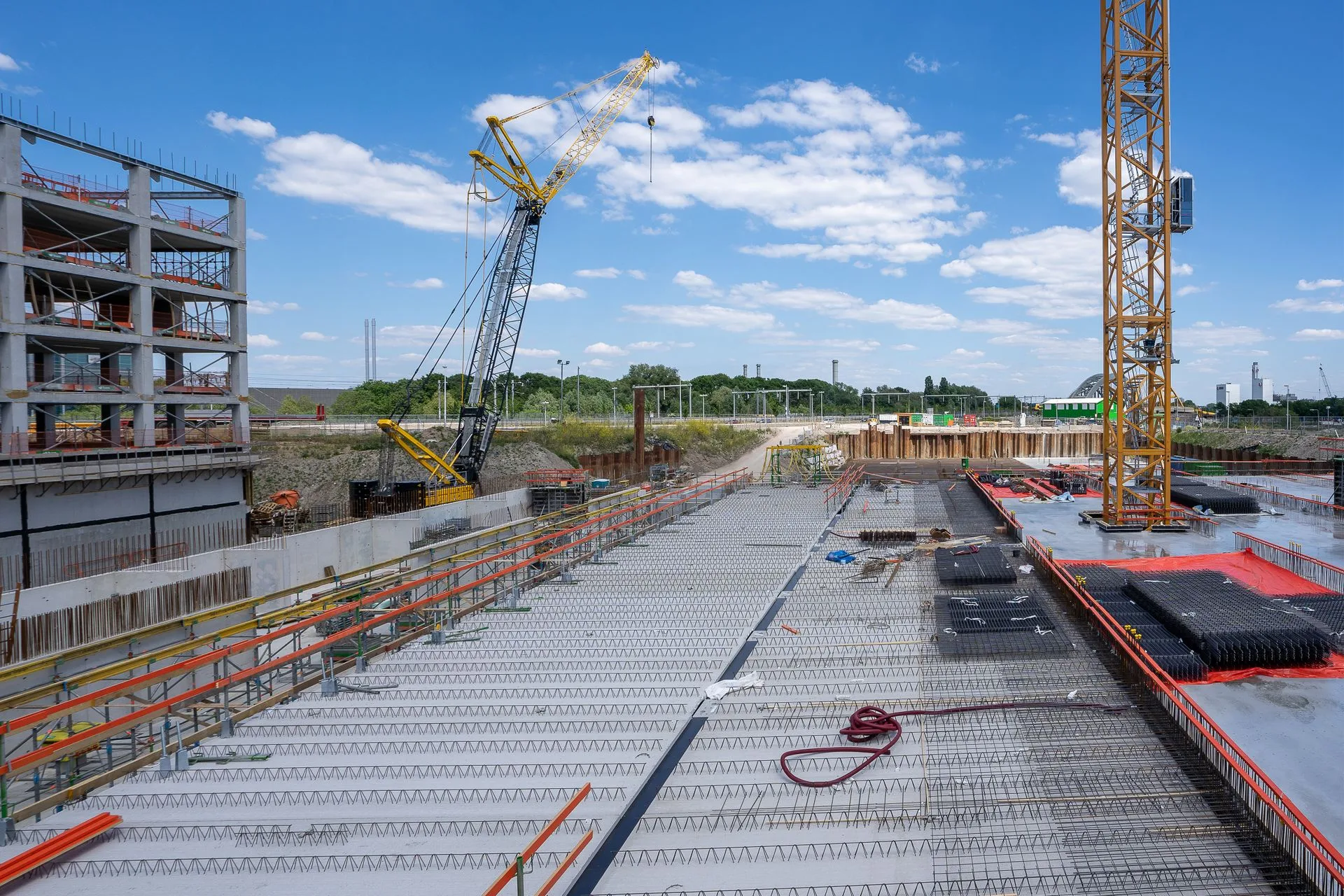
Phase 3: Construction (Months 10–24)
Permits are in hand. Construction begins. This is the phase most franchisees think about when they picture “building a Primrose.”
A typical Primrose School is a 10,000 to 12,000 square foot purpose-built childcare facility. According to Callaway Childcare Construction’s cost guide, childcare facility construction typically runs 7 to 12 months depending on complexity, weather, and contractor availability.
Primrose-Specific Construction Requirements
Primrose’s brand standards impose construction specifications beyond standard commercial build-out:
- Classroom configurations: Designed to meet state-mandated staff-to-child ratios with dedicated rooms for each age group — infant, toddler, early preschool, preschool, pre-K, and school-age. Each room has specific square footage, fixture, and egress requirements. See our analysis of how state licensing ratios affect market selection for the economic implications of these configurations.
- Commercial kitchen: Full food preparation facility meeting health department commercial kitchen standards — not a warming kitchen, not a catering setup
- Outdoor play areas: Separate age-appropriate play zones with CPSC-compliant safety surfacing, shade structures, fencing, and drainage. Some markets require covered outdoor areas.
- Security systems: Controlled-access entry, classroom cameras, visitor management systems. These are brand-mandated, not optional.
- HVAC specifications: Enhanced ventilation and filtration for childcare environments, often exceeding standard commercial building code
- Specialty flooring and finishes: Impact-absorbing flooring in specific areas, moisture-resistant materials in diaper-changing and bathroom areas, low-VOC requirements throughout
Cash Flow During Construction
This phase is where the largest tranche of capital gets deployed, typically through monthly construction draws against your SBA 504 or SBA 7(a) loan:
- Monthly construction draws: $150,000 to $400,000 per month depending on phase
- Interest-only payments on drawn loan amounts: Accumulating monthly as draws increase
- Lease payments: If you signed a build-to-suit lease, rent commencement often starts at building shell delivery — not at your opening date. This means 4 to 8 months of rent before your first enrollment.
- Insurance premiums: Builder’s risk insurance during construction, transitioning to commercial general liability as opening approaches
- Franchise-required progress inspections: Travel and fees for franchisor construction milestone reviews
The critical nuance: construction loan interest compounds on drawn amounts. In month one, you are paying interest on $150K. By month eight, you are paying interest on $2M+. The carrying cost accelerates even though your construction spend rate may be constant.
Construction Delays
According to the Associated General Contractors of America, 65% of commercial construction projects experience delays of 30 days or more. Common causes for childcare facilities:
- Supply chain disruptions on specialized equipment (commercial kitchen, playground structures)
- Failed municipal inspections requiring remediation
- Weather delays in markets with winter construction constraints
- Subcontractor scheduling conflicts
Every month of delay is a month of additional carrying cost — interest, lease payments, insurance — against zero revenue.
Phase 4: Pre-Opening Operations (Months 22–30)
Construction is complete or nearing completion. The building exists. But it is an empty building with no staff, no enrolled families, no state operating license, and no revenue.
Phase 4 is the sprint between a finished building and an operating school. It is also more expensive than most franchisees anticipate.
What Gets Deployed in Phase 4
Training and staffing:
- Training fee to Primrose: $35,000
- Director and assistant director hiring: 2–3 months before opening
- Teacher recruitment: 30 to 45 teachers plus administrative staff
- Background checks, drug screening, credential verification: $3,000 to $8,000
- Pre-opening payroll: 2 to 4 weeks of full staff payroll before first enrollment — $40,000 to $80,000
Marketing and enrollment:
- Grand opening and pre-enrollment marketing: $40,000 to $105,000
- Pre-enrollment events, community outreach, open houses
- Digital marketing setup (website, local SEO, paid search, social media)
- Signage and exterior branding installation
Licensing and compliance:
- State licensing final inspection — scheduling alone can take 2 to 6 weeks
- Health department final clearance
- Fire marshal final inspection and occupancy certificate
- Insurance binding (commercial general liability, workers’ compensation, professional liability)
Technology and operations:
- Childcare management software setup and training
- Point-of-sale and billing systems
- Security system activation and testing
- Furniture, fixtures, and equipment (FF&E) not included in construction
- Classroom materials, curriculum supplies, consumables
Total Phase 4 capital deployed: $255,000 to $560,000
This is deployed in the final 2 to 3 months before opening. It is a cash surge at the exact moment your construction loan has reached maximum draw and your carrying costs are at their peak.
The Staffing Timing Problem
You cannot wait until opening day to hire. Teachers need onboarding, training on Primrose’s proprietary curriculum (Balanced Learning), classroom setup time, and relationship building with early-enrolled families. Most operators begin full staffing 2 to 4 weeks before the first child walks through the door.
But teacher recruitment in the current market is itself a 4 to 8 week process. Which means recruiting starts 6 to 12 weeks before opening. Which means HR costs, job posting fees, and recruiting time are burning during the final months of construction.
If you lose a director candidate at the last minute, your opening date can slip — adding more carrying cost to the pre-revenue period.
The Combined Timeline: 42–60 Months to Stabilized Cash Flow
Here is the full picture, laid out end to end:
| Phase | Duration | Capital Deployed | Cumulative |
|---|---|---|---|
| Phase 1: Site selection and lease | Months 1–4 | $97K–$375K | $97K–$375K |
| Phase 2: Permitting | Months 4–16 | $90K–$255K | $187K–$630K |
| Phase 3: Construction | Months 10–24 | $1.5M–$4.5M | $1.7M–$5.1M |
| Phase 4: Pre-opening | Months 22–30 | $255K–$560K | $2M–$5.7M |
| Subtotal: Pre-opening | 24–36 months | $2M–$5.7M | — |
| Post-opening ramp to stabilized cash flow | 18–24 months | Variable (ongoing losses) | — |
| Total: Agreement to stabilized operations | 42–60 months | — | — |
At the average Primrose investment level, you are carrying $2M to $5M in deployed capital for 3.5 to 5 years before the location generates enough to cover its own costs. The FDD reports average unit revenue of $2,728,570 and average EBITDA of $508,975 — but those are stabilized numbers from mature locations, not year-one or year-two figures.
The Carrying Cost Calculation Nobody Does
Model these costs for the pre-opening period alone:
- Construction loan interest: At current SBA rates (prime + 1–2.75%), interest on $3M in cumulative draws over 12 months of construction could run $120,000 to $200,000
- Lease payments during construction and ramp: If rent commencement starts at shell delivery, 6 to 12 months of pre-revenue rent at $15,000 to $30,000/month = $90,000 to $360,000. This is the gap that matters when evaluating EBITDA vs. EBITDAR for a new location.
- Payroll before break-even: From pre-opening staffing through the first 12 months of enrollment ramp, payroll runs ahead of revenue by a significant margin
- Insurance, utilities, and fixed costs: $8,000 to $15,000 per month from building delivery onward
These carrying costs do not appear as a single line item in the FDD. They are distributed across multiple categories. They are real, and they compound.
Understanding the construction-to-permanent loan conversion timeline is critical to managing this exposure — the point at which your construction loan converts to a permanent mortgage changes your payment structure, interest rate, and cash flow requirements. Lendesca can help model the capital deployment phases against available SBA structures, including the differences between 504 and 7(a) financing for this specific use case.
With the SBA SOP October 2026 changes approaching, the timing of your loan application relative to your construction timeline adds another variable to the capital deployment model.
What This Means for Your Decision
This is not an argument against investing in a Primrose franchise. Average EBITDA of $508,975 on average revenue of $2,728,570 represents an 18.6% EBITDA margin at stabilization — a credible return for a semi-absentee owner-operator model in a recession-resistant sector.
But the return profile changes dramatically depending on how you model the time dimension of capital deployment.
A franchisee who models only the total investment — $742,900 to $1,525,000 for a build-to-suit — is looking at a 2 to 3 year payback on invested capital. That looks attractive.
A franchisee who models the timeline — 42 to 60 months of capital deployed, accumulated carrying costs, and opportunity cost of committed capital — may calculate a 5 to 7 year payback on total economic cost. That is a meaningfully different investment proposition.
Neither calculation is wrong. But making a seven-figure decision using only the first one is incomplete.
The Pre-Opening Checklist Most Investors Miss
Before signing, stress-test your timeline assumptions against these questions:
- What is the average permitting timeline in your specific municipality? Not the state average — your city, your planning department. Call them. Ask how many childcare facility permits they processed last year and what the average review time was.
- What is the construction labor market in your metro? Tight markets mean longer timelines and higher costs. Check contractor availability before you assume a 7-month build.
- When does rent commencement trigger in your lease? Shell delivery, certificate of occupancy, or opening date? This single term can shift $100K+ in pre-revenue carrying costs.
- What is your state’s licensing inspection backlog? Some states have 4 to 8 week backlogs for final licensing inspections. A completed building sitting idle waiting for a state inspector is pure carrying cost.
- What is your capital reserve beyond the FDD’s 3-month estimate? If the FDD estimates $180K to $420K for 3 months and the ramp takes 18 months, where is the remaining 15 months of operating capital coming from?
- What is your construction-to-permanent loan conversion date? Misalignment between construction completion and loan conversion can create payment spikes at the worst possible time.
The Bottom Line
The investment amount is knowable, finite, and disclosed. The investment timeline is variable, market-dependent, and undermodeled by most first-time franchisees.
Twenty-four to thirty-six months of pre-opening capital deployment. Eighteen to twenty-four months of post-opening enrollment ramp. Forty-two to sixty months from franchise agreement to stabilized cash flow.
Model the timeline. Model the carrying costs. Model the capital calls by phase.
The number is important. But when each dollar leaves — and how long it works for free — is what determines whether the investment thesis holds.