The Adaptive Reuse Pivot: How David Berg’s Conversion Strategy Changes the Math on Your First Primrose Investment
Ground-up builds run $5M+ and take three years before your first tuition dollar. Primrose just opened a second door — and the numbers look completely different.
You’ve been running the math on a Primrose Schools investment, and the numbers keep landing in the same uncomfortable range: $5 million or more in total investment, 24–36 months of pre-opening capital deployment, and an 18-month enrollment ramp before you approach breakeven. That’s potentially four and a half years of capital at risk before the P&L turns positive.
In June 2026, Primrose quietly shifted the equation. The company’s new leadership announcement didn’t just introduce CEO David Berg and a refreshed executive team — it explicitly named “conversions and acquisitions” as a development pathway alongside the traditional ground-up build. That’s the first time Primrose has systematically promoted adaptive reuse as a growth model, and it changes the investment thesis for a meaningful segment of prospective franchisees.
What “Adaptive Reuse” Actually Means in Primrose’s Context
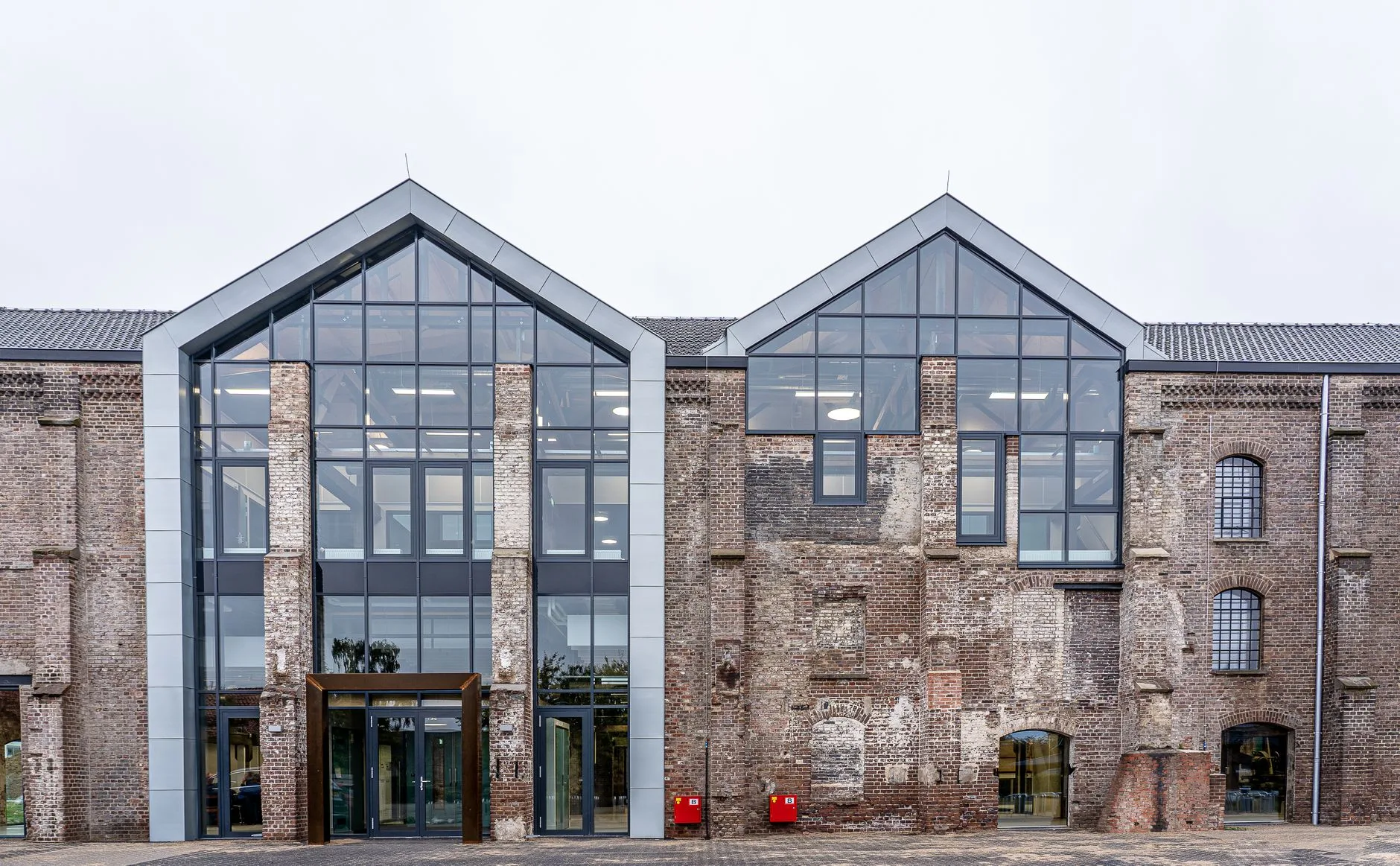
Adaptive reuse means converting an existing commercial building into a Primrose-standard childcare facility rather than constructing one from scratch. The Primrose FDD separates cost estimates for “New-Build Schools” and “Adaptive-Reuse Schools” — a distinction that has existed in the disclosure documents but hasn’t been a featured development strategy until now.
The cost difference is substantial:
- Ground-up new build: $5M–$8.6M total investment, including land acquisition or ground lease, purpose-built construction to Primrose’s proprietary specifications, and the full pre-opening capital stack
- Adaptive reuse conversion: ~$2.15M–$4.5M total investment, depending on the condition and configuration of the existing building, scope of required modifications, and local permitting environment
That’s roughly a 40–55% reduction in capital deployed before opening day. For an investor weighing a Primrose investment against other uses of that capital, the conversion model opens the door to a fundamentally different risk profile. For the real estate breakdown of the traditional path, see the $785K real estate variable.
The Timeline Compression
The financial benefit isn’t just the lower absolute investment — it’s the compressed deployment timeline.
A ground-up Primrose build follows a sequence that the company’s own materials acknowledge takes 24–36 months from commitment to opening:
- Territory analysis and site selection (3–6 months)
- Land acquisition and entitlements (6–12 months)
- Construction (12–18 months)
- Licensing and pre-opening staffing (2–4 months)
Adaptive reuse compresses steps 2 and 3 dramatically. The building already exists. Entitlements may still require modification (childcare is a distinct use class in most zoning codes), but you’re not starting from raw land. Realistic conversion timelines run 12–18 months from commitment to doors open — roughly half the ground-up timeline.
That compression matters because every month of pre-opening is a month of cash burn with zero revenue. At Primrose investment levels, carrying costs during pre-opening — loan interest, property taxes, insurance, pre-opening salaries — can run $15,000–$25,000 per month. Cutting 12–18 months off the pre-opening timeline saves $180,000–$450,000 in carrying costs alone.
The Financing Structure Shifts
The development model you choose determines which SBA program makes sense, and conversions point toward a different financing architecture.
Ground-up builds lean heavily on SBA 504 loans, which are designed for major fixed-asset purchases (land and construction). The 504 structure — typically 50% bank loan, 40% CDC/SBA debenture, 10% borrower equity — is purpose-built for the $3M–$5M real estate component of a new Primrose school.
Conversions shift the balance toward SBA 7(a) loans, which are more flexible for business acquisitions and renovations. If you’re acquiring an existing childcare operation and converting it to Primrose, the 7(a) program covers the full transaction: building purchase, renovation, equipment, working capital, and franchise fees in a single instrument.
The practical difference for the borrower: 504 loans offer lower rates on the real estate component but require two separate closings and more rigid use-of-proceeds requirements. 7(a) loans are simpler to structure but carry slightly higher rates. For conversions under $5M — which most adaptive reuse Primrose projects will be — the 7(a) simplicity often wins.
If you’re evaluating SBA options for a Primrose conversion, Lendesca can help you model the 504 vs 7(a) tradeoff for your specific deal structure.
What Conversions Don’t Fix
The lower investment and faster timeline are real. But three structural constraints apply equally to conversions and ground-up builds — and prospective franchisees who focus on the cost reduction without accounting for these will build a flawed model.
1. Mandated Staffing Ratios Don’t Care About Your Building
Whether you built from scratch or converted a strip mall, your state’s child-to-teacher ratios are the same. A Primrose school serving infants through pre-K in Texas needs one teacher for every four infants, one for every 11 three-year-olds, and one for every 15 four-year-olds. Payroll runs 45% of revenue or higher regardless of how you acquired the building. The conversion saves you construction dollars, not operating dollars. For the full picture, see the payroll ceiling analysis.
2. Primrose’s Proprietary Facility Standards Limit Which Buildings Qualify
Not every commercial building can become a Primrose school. The company’s proprietary design standards specify classroom sizes, outdoor play area requirements, security vestibule configurations, kitchen specifications, and age-specific bathroom ratios. A building that works for a generic daycare may not meet Primrose’s standards without modifications that erode the cost advantage.
The best conversion candidates are:
- Existing childcare centers (already built to childcare specifications)
- Medical offices (similar room configurations, plumbing in every room)
- Church or community center buildings (large open spaces, parking, often in family-dense neighborhoods)
Retail spaces, restaurants, and office buildings typically require more extensive modifications and may not pencil out once Primrose-specific requirements are layered in.
3. The Franchise Fee Load Is Identical
Primrose’s fee structure — 7% royalty, plus brand fund contributions, plus technology fees — runs 11–13% of gross revenue regardless of how the school was built. A conversion that generates $2.7M in annual revenue (the system-wide median AUV) pays the same ~$300K in annual franchise fees as a ground-up school at the same revenue level. The fee load is tied to your revenue, not your investment basis.
The Acquisition Variant: Buying an Existing Primrose Location
Berg’s announcement also references “acquisitions” — buying an existing Primrose school from a current franchisee rather than building or converting. This is a distinct path with its own economics:
- Pro: Existing enrollment base means no 18-month ramp. Day one revenue.
- Pro: Proven location with established parent relationships and staff.
- Con: Premium valuation. Mature Primrose locations with strong enrollment trade at 3–5× EBITDA, which on a $200K–$400K EBITDA school means $600K–$2M in goodwill on top of the real estate value.
- Con: SBA’s October 2026 rule changes add a DSCR floor of 1.25× and mandatory quality-of-earnings reports for acquisitions over $3M, making financing more demanding. See our detailed SBA rule analysis.
The acquisition path eliminates the enrollment ramp risk but introduces valuation risk. You’re paying for proven cash flow — and the question is whether the premium prices you out of reasonable returns.
Who Should Choose Which Path
The right development model depends on your capital position, risk tolerance, and timeline:
| Factor | Ground-Up Build | Adaptive Reuse | Acquisition |
|---|---|---|---|
| Total investment | $5M–$8.6M | $2.15M–$4.5M | $3M–$7M+ |
| Time to revenue | 36–54 months | 18–30 months | Immediate |
| Enrollment risk | Full 18-month ramp | Potentially shortened ramp | No ramp |
| Facility control | 100% — built to exact spec | Constrained by existing structure | Inherited |
| Financing | SBA 504 primary | SBA 7(a) primary | SBA 7(a) + goodwill |
| Best for | Well-capitalized investors with long time horizon | Cost-conscious first-timers with real estate experience | Operators prioritizing day-one cash flow |
The Bottom Line
Primrose’s pivot toward adaptive reuse under David Berg is the most meaningful development in its franchise model since the Taurus Capital acquisition. It opens a path for investors who couldn’t or wouldn’t deploy $5M+ for a ground-up build — potentially doubling the addressable franchisee pool.
But lower entry cost doesn’t mean lower operating complexity. The staffing challenge, the fee load, and the regulatory environment are building-agnostic. A conversion that costs half as much to open still requires the same operational discipline to run — and the P&L once the doors open looks nearly identical to a ground-up school at the same revenue level.
The conversion model changes when and how much you invest. It doesn’t change what you’re investing in.