The 100-Unit Stampede: What the Largest Single-Year Expansion in Company History Means If You’re Already Open
Youth Enrichment Brands announced plans to open over 100 new School of Rock franchise units in 2026 — the highest annual number in company history. At 303 US locations, that is 33% network growth in a single year. For a prospective buyer, this is brand momentum. For an existing franchisee in a non-exclusive territory, it is a competition for three things you cannot manufacture: instructors, parents, and corporate attention.
The Announcement
In December 2025, Youth Enrichment Brands — the Roark Capital–backed platform that owns School of Rock alongside i9 Sports, SafeSplash Swim School, and US Sports Camps — issued its 2026 outlook. The headline number: a 20% year-over-year increase in new franchise agreements in 2025, with more than 100 new franchise units planned for 2026.
The franchise system celebrated its 450th school opening in Munich, Germany in May 2026. As of mid-2026, approximately 303 schools operate in the US and 135+ internationally, with 650+ in various stages of development across 23 countries.
One hundred new openings is not a projection on a slide deck. It is a public commitment from a private-equity-backed platform that measures its leadership on growth metrics. Roark Capital’s franchise portfolio playbook — proven across Arby’s, Inspire Brands, and now YEB — is well-documented: grow the unit count, grow the royalty base, and optimize for exit valuation.
For the franchisor, 100 new schools means roughly $6 million in initial franchise fees ($59,900 × 100), plus the future royalty stream (8% of each school’s gross revenue, indefinitely). The incentive alignment is clear: open more schools.
For the existing network, the incentives are more complicated.
The Three Scarce Resources
Every new School of Rock opening competes with existing schools for three resources that are finite in the short term. The competition is not theoretical — it operates at the metro-area level, in real time, from the first week a new location begins hiring.
1. The Instructor Pool
School of Rock employs 14–21 part-time instructors per location, with labor costs at approximately 38% of revenue. These instructors must be: skilled musicians, willing to teach children, available during after-school hours (3–8 PM weekdays), and able to pass background screening for youth-serving work.
This is not a deep labor pool. In any given metro area, the number of qualified musicians who meet all four criteria is measured in dozens, not hundreds. The existing School of Rock in that metro has already hired the most motivated candidates. A new school opening 15 miles away draws from the same pool.
The consequences:
- Wage pressure. Two SoR schools competing for the same guitarists in the same metro bid up hourly rates. If the current range is $20–$30/hour and a new school offers $25–$35 to attract talent during its grand opening, the existing school must match or lose instructors.
- Poaching during the ramp. A new school under construction has a 3–6 month hiring window before opening. The fastest way to staff is to recruit from the existing SoR down the road — instructors who already know the Method, the systems, and the curriculum. From the new franchisee’s perspective, this is efficient hiring. From the existing franchisee’s perspective, it is losing trained staff to a corporate-approved competitor.
- Quality dilution. If the metro instructor pool supports one school at full quality (15+ instructors, curated by skill and personality), adding a second school means each operates at lower average instructor quality — or one school operates at full quality while the other struggles.
At 100 new openings per year, approximately 1,400–2,100 new instructor positions must be filled nationally. The part-time musician labor market does not grow 33% in a year just because a franchise system needs it to.
2. Parent Attention
SoR’s marketing operates at the local level: Google Ads targeted by zip code, Facebook campaigns in specific metros, partnership events with local schools, and — most importantly — the live performance referral loop that generates 3–5x more enrollments than paid marketing.
When two SoR schools operate within 10–15 miles of each other in a non-exclusive territory, the marketing dynamics shift:
- Google Ads competition. Both schools bid on “music lessons [city name],” “guitar lessons for kids [metro area],” and “School of Rock [region].” They are bidding against each other for the same search terms, driving up cost-per-click for both. Neither school benefits from the other’s ad spend.
- Brand confusion. A parent searching for “School of Rock” in a metro area with two locations sees both results. They may attend the farther location’s trial class, enroll, and then discover the closer one — or vice versa. The conversion path gets muddled when the brand itself competes internally.
- Event overlap. Two schools hosting performances at local venues in the same metro on the same weekend split the audience and dilute the referral effect. The power of the SoR performance model as a marketing engine depends on being the only SoR show in town.
- School partnership exclusivity. If the existing SoR has partnerships with 5 elementary schools for after-school programs, a new SoR cannot approach those same schools. The remaining schools in the district are farther away, harder to service, and less likely to convert.
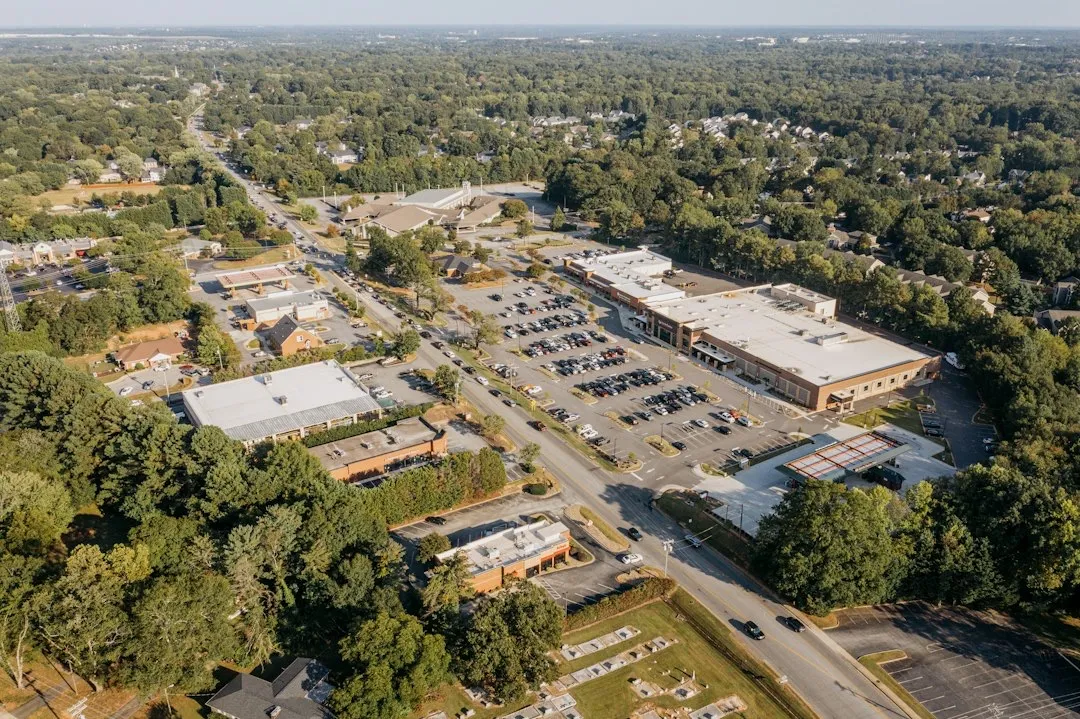
At 303 US locations spread across major metros, many territories already have multiple SoR schools. Adding 100 more — even if some are in new markets — will increase density in existing metros where the unattached territories sit adjacent to operating schools.
3. Corporate Support Bandwidth
The School of Rock franchisor operates under the YEB corporate umbrella, which also manages i9 Sports, SafeSplash, and US Sports Camps. The corporate team that handles franchisee onboarding, training, operations support, technology development, and field visits is shared across all four brands.
One hundred simultaneous grand openings means:
- Onboarding load. Each new franchisee requires initial training (Grand Opening training, proprietary systems onboarding, Method certification for the first instructor cohort). At 100 new openings, that is 100 training cycles in 12 months — nearly 2 per week.
- Field support dilution. The operations team that visits existing schools to help with marketing, instructor management, and enrollment growth is the same team supporting grand openings. Grand openings are higher-urgency, more visible, and more directly tied to the franchisor’s growth metrics. Existing schools’ support requests get deprioritized during expansion sprints.
- Technology queue. Feature requests, bug fixes, and system improvements for existing franchisees compete with the technical work needed to onboard 100 new schools onto the Method App, billing systems, and scheduling platforms. Onboarding is table-stakes work that cannot be deferred; feature improvements can be.
- Marketing material lag. National marketing campaigns, co-op advertising programs, and brand-level content must now account for a 33% larger network. If the marketing budget doesn’t scale proportionally — and in PE-backed systems, the brand fund contribution (3% of gross) scales with revenue, not with marketing need — each school’s share of the marketing resource pool shrinks.
Franchisee satisfaction data is useful context here. SoR reports 85/100 satisfaction on a franchisor-administered survey. That number was measured before the 100-unit expansion plan was announced. It will be interesting to see whether it holds when the support team is managing 33% more relationships with the same headcount.
The Non-Exclusive Territory Amplifier
School of Rock territories are non-exclusive. The franchise agreement does not guarantee that another SoR will not open in your market. The franchisor reserves the right to place additional schools based on population density, market demand, and development targets.
In a traditional franchise with exclusive territories, a 100-unit expansion plan has no direct impact on existing franchisees because the new units go in new territories. In SoR’s non-exclusive model, new units can land next to existing ones.
The 2025 FDD reports a population-per-unit ratio of approximately 1:1.4 million at 303 US locations. Adding 100 units compresses that ratio to approximately 1:860,000 — assuming all 100 are domestic, which they likely are not. But the ratio is a national average. In the metros where SoR concentrates — major suburban corridors in the Northeast, Southeast, Texas, and California — the effective ratio may already be 1:400,000 or less.
YEB’s stated plan to sell 85 open US territories means the density increase is not evenly distributed. It is concentrated in the 36 states where territories are available, in the metro areas where demographic and income data support a new school.
If your school is in one of those metros, the expansion plan is your expansion plan.
The Franchisor’s Math vs. Your Math
The divergence between the franchisor’s incentives and the individual franchisee’s interests is starkest during rapid expansion periods.
The franchisor’s 2026 revenue from 100 new schools:
| Revenue Source | Calculation | Annual Amount |
|---|---|---|
| Initial franchise fees | 100 × $59,900 | $5,990,000 |
| Year-1 royalties (at 50% of system average) | 100 × $336K × 8% | $2,688,000 |
| Year-1 technology fees | 100 × $3,120 | $312,000 |
| Year-1 Method App fees (est. 80 students/school) | 100 × 80 × $6.21 × 12 | $596,160 |
| Total Year 1 from new schools | $9,586,160 |
This is approximately $9.6 million in new revenue from the act of opening schools, before those schools become profitable for their owners. The franchisor’s revenue is front-loaded; the franchisee’s return is back-loaded over 6–8 years.
An existing franchisee’s exposure from 100 new schools:
- Higher instructor wages (estimated 5–15% increase in metros with new openings)
- Higher Google Ads CPCs (estimated 10–25% increase when competing against a same-brand school)
- Diluted corporate support (fewer field visits, longer response times)
- Potential enrollment displacement (unknowable in advance, but the non-exclusive territory provides no protection)
None of these costs appear on the existing franchisee’s P&L as “expansion impact.” They show up as higher labor costs, higher marketing costs, lower enrollment, and slower support — each attributable to multiple causes. The expansion is a contributing factor that cannot be isolated from the data.
What to Ask Before You Sign
If you are evaluating a School of Rock franchise in 2026, the 100-unit expansion plan is not background noise. It is a material input to your financial model.
Questions for validation calls with existing franchisees:
- Has a new SoR school opened within 20 miles of yours in the last two years? What happened to your enrollment and instructor retention?
- Have you experienced instructor poaching by a nearby SoR location? How did you respond?
- Has your field support contact changed in the last year? How often do you see them compared to two years ago?
- Are your Google Ads costs increasing? If so, are you competing against another SoR location for the same search terms?
Questions for the franchisor:
- How many of the 100 planned openings are in metros that already have an operating SoR school?
- What is the minimum distance between schools in the same metro?
- Does the franchisor commit to not opening a new school within N miles of an existing one? If not, what protections exist?
- Has the operations team been expanded proportionally to support a 33% larger network?
The answers will tell you whether the expansion plan is additive (new markets, new demographics, no overlap) or compressive (more schools in existing markets, splitting the same resources).
The Bigger Question
One hundred new schools in a single year is an impressive growth number. It is also a number that exists to serve the franchisor’s revenue model and the PE platform’s valuation thesis.
The question for a prospective franchisee is not whether the brand is growing. It is whether the growth makes your school more valuable or less.
In an exclusive-territory system, system growth is unambiguously positive: more brand awareness, more national marketing power, more vendor leverage, no internal competition. In a non-exclusive system expanding at 33% per year, the relationship between system growth and individual franchisee value is complicated, territory-specific, and not guaranteed to be positive.
Model it both ways. If the expansion adds 2–3 schools in your metro over the next 3 years, what happens to your enrollment model, your labor costs, and your marketing efficiency? If the answer is “nothing changes because the market is big enough,” that is a thesis worth testing against the instructor-pool math. Fifteen qualified part-time musicians do not become 30 because a second school opens.