
The Non-Exclusive Territory Gamble: Why School of Rock’s Growth Targets Should Make Prospective Franchisees Nervous
YEB plans 100+ new units in 2026 — the most in company history. The FDD grants non-exclusive territory with no guaranteed minimum size. Nobody is connecting these two facts. This analysis does.
Youth Enrichment Brands has announced plans to open more than 100 new School of Rock franchise units in 2026. That is the most aggressive annual expansion target in the brand’s history — roughly double the pace of the prior three years, which grew the franchised system from 199 to 254 units (a 28% increase).
At the same time, the 2025 Franchise Disclosure Document — the one a prospective buyer signs against — specifies that territories are non-exclusive. The franchisor retains the right to operate, or license others to operate, within your designated area.
These two facts exist in the same legal document. They are rarely discussed together. If you are committing $425,250 to $704,800 in total initial investment to open a School of Rock, the collision between aggressive growth targets and permissive territory language is the single most important risk factor in the FDD that does not appear in the franchise sales pitch.
This piece breaks down what “non-exclusive” actually means in the School of Rock FDD, models the arithmetic of 100+ new openings against 234 estimated open territories, and walks through the encroachment scenario most buyers never think to model until it is too late.
What “Non-Exclusive” Actually Means in the FDD
Most franchise buyers assume they are buying a protected market. They are not.
The School of Rock FDD defines your territory as a geographic area that varies by population density. Urban territories are smaller. Suburban and rural territories are larger. There is no guaranteed minimum population, no guaranteed minimum radius, and no revenue floor tied to the territory grant.
What the franchisor can do inside your territory
The FTC Franchise Rule requires franchisors to disclose their territorial policies in Item 12 of the FDD. Here is what School of Rock’s Item 12 permits:
- Open another franchised or company-owned school in your territory. The franchisor is not required to ask your permission or give you right of first refusal.
- Sell products and services through alternative channels (online, wholesale, institutional partnerships) that reach customers in your area. See the online channel conflict for what this means in practice.
- Modify your territory boundaries upon renewal or transfer.
What you cannot do outside your territory
All live performances — a core component of the School of Rock model and a significant driver of enrollment through community visibility — must occur inside your designated territory unless you obtain written consent from the franchisor. This is not a minor constraint. Performance events are the brand’s primary organic marketing tool. If a neighboring school opens and your territory is redrawn or contested, your ability to market through performances is restricted to your shrinking footprint.
What buyers assume vs. what they are buying
The gap between expectation and contract is wide. Most buyers, particularly first-time franchisees exploring opportunities through the IFA’s franchise basics resources, assume a franchise territory functions like an exclusive license. School of Rock’s does not. You are buying a location and a non-exclusive right to operate in an area. The franchisor’s obligation is to define a territory — not to protect it.
This distinction matters more when the franchisor is actively trying to grow. A non-exclusive territory in a slow-growth system is a theoretical risk. A non-exclusive territory in a system targeting 100+ new units per year is a structural one.
The Growth Arithmetic: 254 Today, 354+ by End of 2026?
The numbers tell a clear story about trajectory and acceleration.
Three-year unit growth
| Year-End | Franchised Units | Company-Owned | Total |
|---|---|---|---|
| 2021 | 199 | ~45 | ~244 |
| 2024 | 254 | 49 | 303 |
| 2026 target | 354+ | 50+ | 404+ |
From 2021 to 2024, the franchised system added 55 units — roughly 18 per year. The 2026 target of 100+ new units represents a pace increase of more than 5x the recent annual average. New franchise agreements were already up 20% year-over-year in 2025, which suggests the sales pipeline is building.
Where do 100 new units go?
There are an estimated 234 open territories across the United States. If even 70 of the 100+ planned units are domestic, nearly a third of remaining open territories will be claimed in a single year.
International expansion absorbs some of the target. The first UK School of Rock location has opened, backed by a 30-unit UK development agreement. A separate 35-unit agreement covers Germany. But international units require different infrastructure, licensing, and timelines. The near-term growth engine is domestic.
The saturation math
With 303 total units (franchised and company-owned) serving roughly 335 million Americans, the current ratio is about 1,106,000 people per School of Rock location. That sounds like room to grow — and it is, on a national average basis.
But franchise locations do not serve the national average. They serve households with school-age children, above-median household income, and interest in music education. Filter for that demographic and the addressable market per unit shrinks considerably. The 234 open territories are not 234 equally attractive markets. Some are open because they are excellent opportunities nobody has taken yet. Many are open because they are secondary or tertiary markets with thinner demand.
As the easy metro markets fill, new franchisees will increasingly be directed toward markets that the franchisor’s own sales team — and existing franchisees — have already passed on.
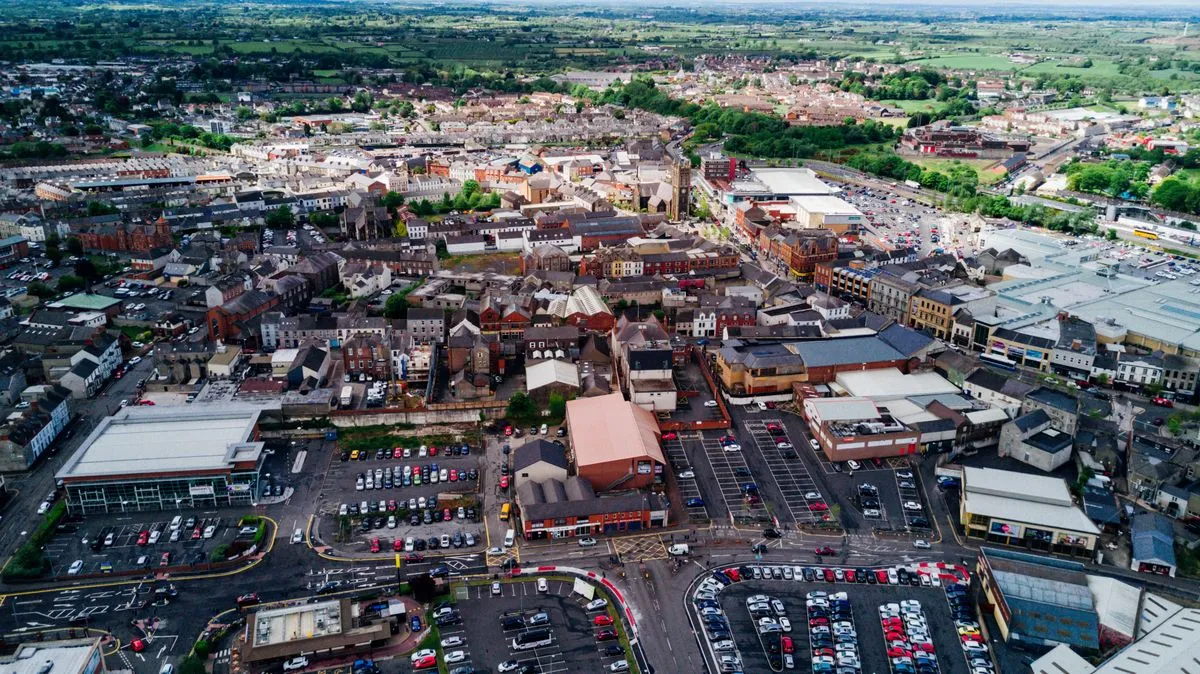
The Encroachment Scenario: What It Actually Looks Like
Abstract territory risk becomes concrete when you model it against real unit economics. Here is a scenario built from FDD data.
Year zero: you sign
You invest $550,000 (mid-range of the $425K–$705K Item 7 estimate) to open a School of Rock in a suburban territory. Your territory covers roughly 300,000 people. You expect 18–24 months to reach operational breakeven.
Year two: you are building
After two years of work, you have enrolled 150 students. Your gross revenue is approaching the franchised median of $640,486. You are covering your operating costs and beginning to service your SBA 7(a) debt — probably a $350K–$400K loan at current rates.
You have not yet recouped your initial investment. You are on track but not ahead. This is roughly where the median franchised unit sits.
Year two, month nine: the letter arrives
The franchisor informs you that a new franchised location will open 8 miles from yours, in a territory that partially overlaps your primary enrollment draw area. Under the FDD’s non-exclusive territory clause, this is permitted. You were not offered right of first refusal.
What happens next
Enrollment pressure. Music education is a considered purchase. Parents typically evaluate 1–2 options within a reasonable driving radius. A second School of Rock within 8 miles does not double the brand’s addressable market — it splits the existing demand pool. If your territory’s demographic ceiling is 200–250 potential students, you are now competing for half of them with someone selling the identical product at the identical price.
Marketing cost inflation. You have been spending 3–5% of gross revenue on local advertising, plus the mandatory co-op contribution. Now you need to differentiate against an identical offering. Your cost per enrolled student rises because you are bidding against another franchisee for the same Google search terms, the same local Facebook audiences, and the same community partnerships.
Instructor pool competition. School of Rock’s model depends on working musicians who teach part-time. That labor pool is thin in most markets. A second location within driving distance competes for the same instructors. Wages rise, scheduling flexibility falls, and turnover — already a structural challenge documented in the FDD — accelerates. See the fee stack’s impact for how rising labor costs interact with the 14% royalty-and-fee burden.
Performance territory restriction. Your community performances — the primary organic marketing channel — are restricted to your territory. If the new school’s territory borders or overlaps yours, the venues you have cultivated may now fall outside your designated area. You lose the marketing channel without gaining anything in return.
Modeling the revenue impact
Conservative estimate: a second school within your primary draw area reduces your enrollment growth rate from 15–20% annually to 5–8% in the 12 months following its opening. If you were projecting $750K in year-three revenue, the revised projection is closer to $650K — a $100K haircut. Against a fixed cost base that includes rent, loan payments, and the 14% fee stack, that $100K comes directly out of your operating margin.
The franchised average revenue is $672,488. The median is $640,486. The revenue gap analysis already shows that half of franchised schools sit below median. A $100K revenue reduction pushes a median-performing school into the bottom quartile. It pushes a below-median school toward the $173,015 floor — where debt service alone may exceed operating income.
The Non-Compete Offers No Real Protection
The FDD includes a post-termination non-compete: 1 year, 2-mile radius. If you exit the system, you cannot operate a competing music education business within 2 miles for 12 months.
This is worth noting for what it reveals about the franchisor’s view of competitive distance. If 2 miles is the radius at which the franchisor considers a former school a competitive threat, then a new school opening 8 miles away — well outside that radius — is apparently not considered competitive by the franchisor’s own standard.
But for the franchisee, 8 miles is well within the enrollment draw area. Parents driving their children to music lessons are making 15–20 minute trips. In suburban markets, 8 miles is a 12-minute drive. The franchisor’s definition of competitive proximity and the franchisee’s real-world experience of market overlap are not the same.
International Expansion Is Not a Safety Valve
Some prospective franchisees take comfort in the international growth pipeline. If YEB is placing 30 units in the UK and 35 in Germany, that is 65 units that are not competing for domestic territory.
This is partially true in the near term. But international expansion increases the franchisor’s revenue expectations and overhead — corporate staff, international support teams, regulatory compliance — which in turn increases the pressure to hit domestic growth targets. Private equity sponsors do not fund international expansion as a substitute for domestic growth. They fund it as an addition.
The 100+ unit target for 2026 is a domestic-inclusive number. International openings do not reduce the domestic target; they supplement it. The pace of domestic expansion remains the variable that directly affects your territory.
How to Protect Yourself Before Signing
Non-exclusive territory is not disqualifying. Many successful franchise systems use non-exclusive territories. The risk is not the clause itself — it is the clause combined with aggressive growth targets and no contractual protection mechanisms. Here is what a diligent buyer does.
1. Request the Item 20 table and map every opening
Item 20 of the FDD lists every franchise sold, transferred, terminated, or not renewed. Get the full table. Map every opening in your state and adjacent states for the past three years. Look for clustering patterns. If the franchisor placed three schools within a 20-mile radius in another market, they will do it in yours.
2. Ask the franchisor directly about planned openings in your MSA
This question has a specific, useful answer. The franchisor knows where it has signed development agreements, where it is actively marketing territories, and where company-owned units are planned. Ask. Get the answer in writing. If they decline to answer, that tells you something too.
3. Negotiate territory protections
The FDD is a disclosure document — it describes the standard contract. But franchise agreements are negotiable, particularly in markets the franchisor needs filled. Consider requesting:
- A population floor. Your territory must contain at least X residents (250,000 is a reasonable starting point for suburban markets).
- A distance buffer. No new School of Rock location within Y miles of your school (10–15 miles is standard in other education franchises).
- Right of first refusal. If the franchisor plans to open a new unit in or adjacent to your territory, you get first crack at it.
- A performance threshold. Territory protection that remains in effect as long as you meet defined enrollment or revenue benchmarks.
Will the franchisor agree? Not always. But the negotiation itself reveals how much the franchisor values your market versus how much it values optionality. A franchisor that refuses to grant any territory protection while simultaneously planning 100+ new openings is telling you exactly where its priorities sit.
4. Talk to franchisees whose territories have been impacted
Item 20 gives you contact information for every current franchisee. Call franchisees in markets where a second or third school has opened. Ask:
- How much notice did you receive before the new school was announced?
- What happened to your enrollment in the 6–12 months following the new opening?
- Did the franchisor offer any transition support, marketing assistance, or territory adjustment?
- Would you sign the same agreement again knowing what you know now?
These conversations are more informative than any sales presentation. The FTC Franchise Rule guarantees your right to contact listed franchisees. Use it.
5. Stress-test your pro forma for encroachment
Run your financial model twice: once with your territory intact, and once assuming a second school opens within your draw area in year three. If the second scenario pushes you below breakeven, your investment thesis depends on something the franchisor has no obligation to provide — territorial exclusivity.
Your capital stack should survive the encroachment scenario, not just the optimistic one. If you are financing through an SBA 7(a) loan, your lender will not adjust your payment schedule because a new school opened down the road. Your fixed costs do not care about your territory.
Bottom Line
School of Rock is not a bad franchise. The median franchised school generates $640,486. The brand is recognized. The model — music education through performance — has genuine differentiation. These are real strengths.
But the combination of non-exclusive territory, 100+ planned openings in a single year, and 234 remaining domestic territories creates a specific, quantifiable risk that most franchise sales materials do not address. A buyer committing north of half a million dollars deserves to understand what happens when the growth machine the franchisor is building runs through — or into — their market.
The territory clause is not a footnote. It is the load-bearing wall of your investment thesis. Test it before you sign.